
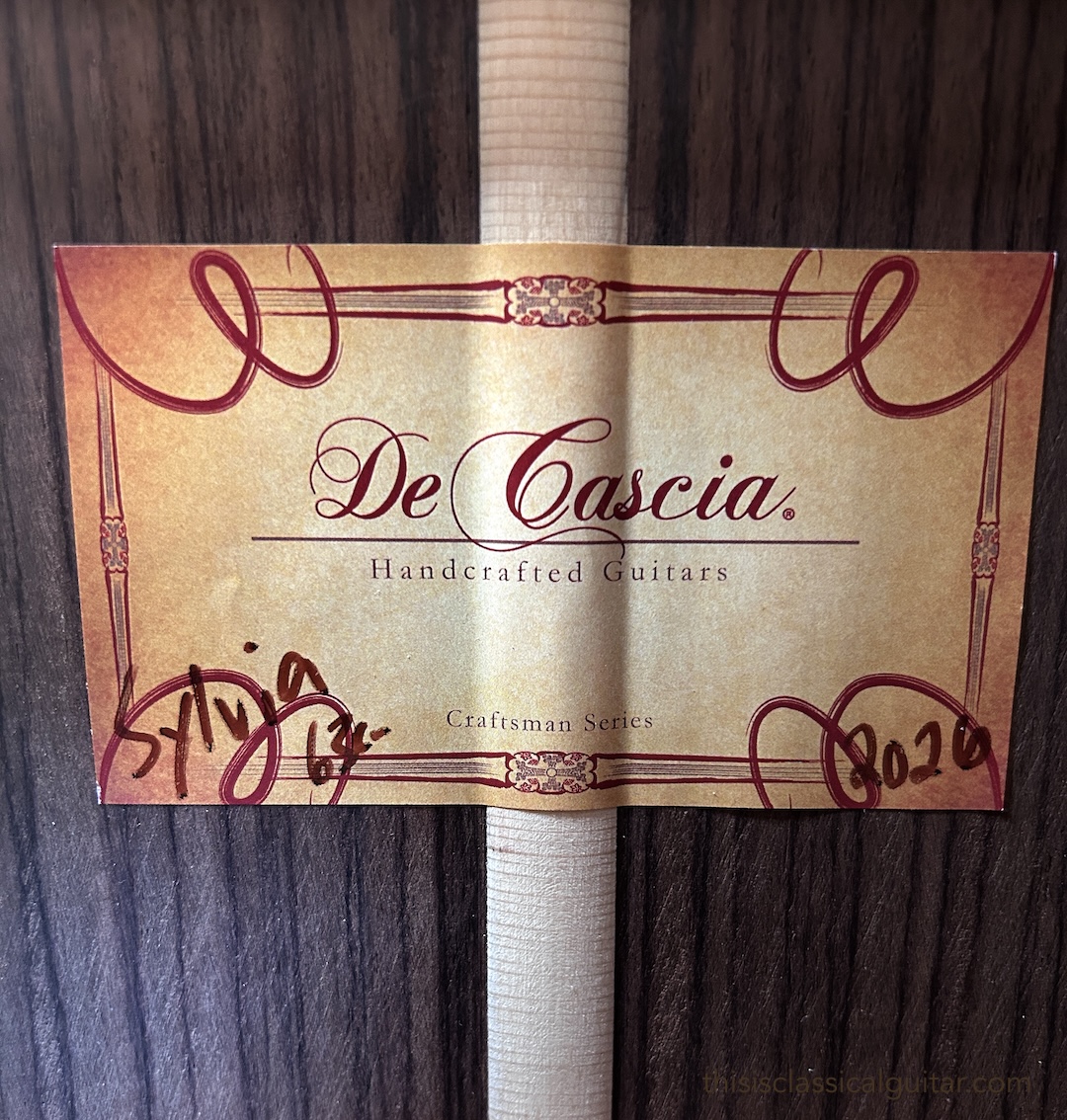
De Cascia ‘Sylvia’ Classical Guitar Review – I’m very pleased to present and review the Sylvia model classical guitar from De Cascia Guitars. I’ve tried the Sylvia model a few times over the years and was very impressed but only now had the pleasure of spending a significant amount of time playing one.
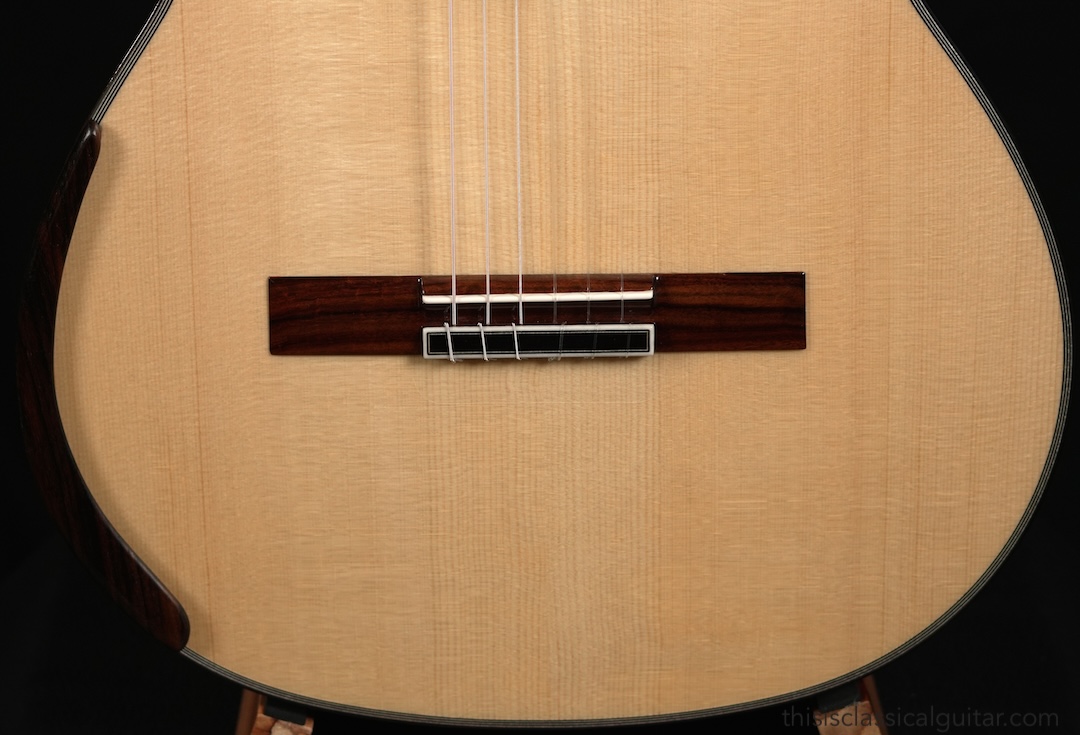
Review Summary: The De Cascia ‘Sylvia’ classical guitar exceeds all my expectations in terms of value, design, and craftsmanship in this price range. For an incredibly affordable price you get a well-balanced and sustaining all-wood lattice braced guitar. Additional design work includes a 12 hole bridge, fully raised fingerboard, armrest, portal, 20th fret, solid spruce/cedar top and Indian rosewood back and sides. A range of scale lengths from 650mm, 640mm, or 630mm with variable nut widths means you can get a perfectly sized instrument for your individual needs. The price of the guitar is absolutely amazing considering the build, design, and beautiful musical potential. Highly recommended and beats most competitors on both quality and price.
Learn More or Buy
- Visit De Cascia Handcrafted Guitars & Cases – Montreal, Quebec, Canada
- Price $2,295.00 CAD (Approx. $1650 USD) – November 2026
Additional Links
- Grand Salon De Guitare – Associated guitar salon in Montreal for fine classical guitars.
- 1st piece I played in the video Lagrima by Tarrega
- 2nd piece: Entree from Partita No.16 by Brescianello
- My classical guitar review and recommendation page
- Here’s my YouTube review link for the video above.
De Cascia Sylvia – Full Review
Review model: I played a 630mm spruce top with 51mm nut width and the upgraded fiberglass case for this review. I changed the strings to my preference using Augustine Regals with a Savarez Allience 3rd string.
Different Scale Lengths and Orientation – It’s amazing to be able to recommend a guitar that comes in a variety of sizes. The one I’m playing is a 630mm but it’s also available in 640mm and 650mm. FYI, a regular full size classical guitar is usually 650mm. This one has a 51mm nut width but it also comes as 52mm. It even comes in left hand orientation if needed.
Volume, Playability, Dynamic Range – The responsiveness, dynamic range, and playability is easily as a good as a guitar twice its price. This is probably the most impressive aspect of the guitar. In particular, for an advanced guitarist or college student (or hobbyist who wants a nice instrument) who can’t afford an $8000 single-luthier made guitar, this is an amazing alternative. The responsiveness is particularly excellent and volume/projection quite good as well. With minimal right hand effort I can get lots of sound or bring out a musical line with ease.
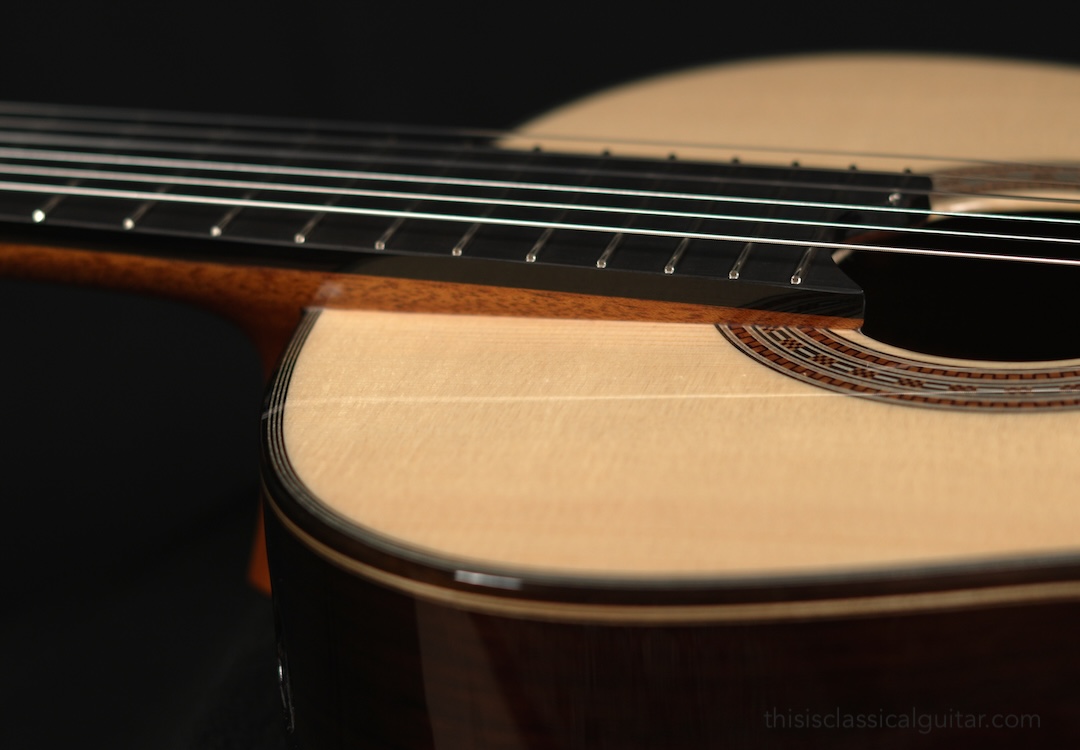
Top Quality Design Aspects – Compared to competitors such as the Cordoba C12, the Sylvia wins in terms of proper design. The raised fingerboard is fully elevated the same as my professional instruments. The inclusion of the 12 hole bridge, 20th fret, and sound portal make this a truely modern classical guitar. The tuners are capable of very precise tuning (18:1 gear ratio) and look great. They are not quite as smooth as I’d hoped by they work great nevertheless.
Sound and Tone – In this price bracket the tone is excellent. The basses are particularly nice on the spruce with lots of clarity and power. The upper strings are very versatile with a range of bright glassy sounds to pure warm bells. The depth of sound on the upper strings is not as thick and woody as my guitars which are four times the price but it’s still doing very well. The unfair comparisons to my other guitars is a compliment to what you get at a fraction of the price. But I want to make it clear there are limits here. Along with good responsiveness the guitar is exceeding my expectations and I was able to get some beautiful and versatile sounds. I should also acknowledge that the spruce top will likely improve with age so I’ll leave an update here in a few months.
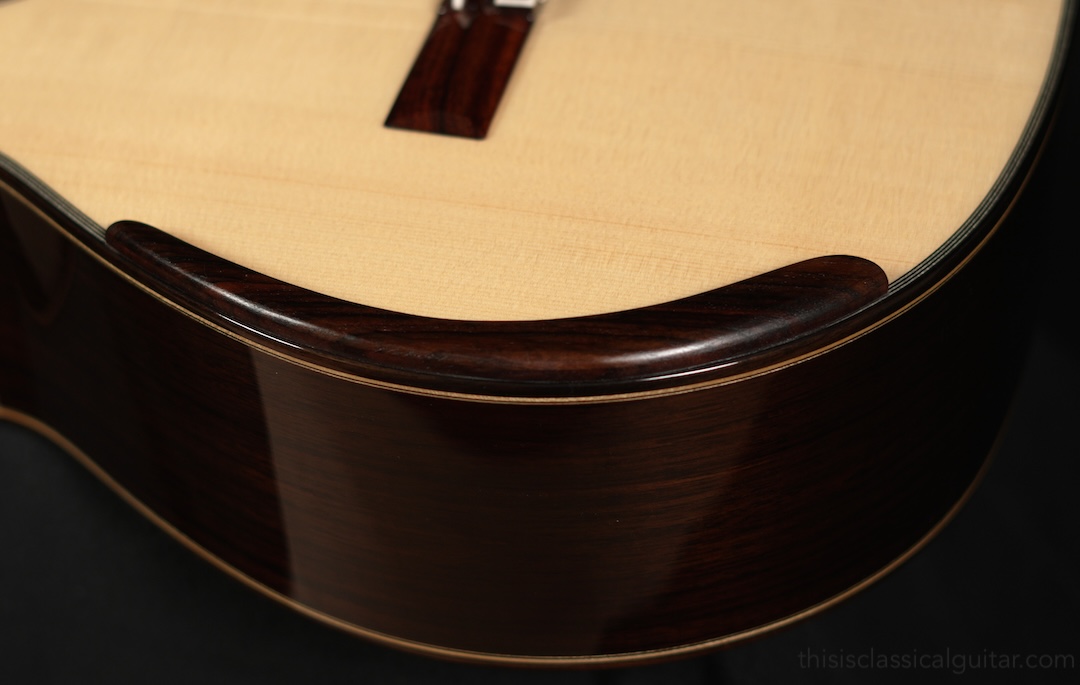
Workmanship and Finishing – Impeccable. Super clean wood work and finishing throughout the whole guitar.
Neck Feel and Action – Very balanced and feels good. I would say the neck profile is right in the middle in terms of thickness and shape, I enjoyed playing it. The action was setup perfectly when sent to me and feels low and easy to play without buzzing on loud passages.
Cedar or Spruce? I have not tried the cedar top significantly enough to comment much on it and I requested a spruce top for clarity, separation, and balance across the strings. I generally recommend cedar to students unless they have excellent right hand tone and control as cedar can be more forgiving, full, and warm. This spruce is quite forgiving so I’d be happy to recommend either but I still recommend cedar for most students.. I’ve tried many cedar lattice guitars that are a bit too dark and muddy in the bass but for some people that just equals a nice tone. I’m pretty certain the cedar would be well balanced and clear enough. I have tried a few but and they seemed great, but it was noisier environments. Based on this guitar I trust the quality of De Cascia and would be fine recommending either. You can contact the owner at De Cascia to discuss this choice or send me an email if you like.
Aesthetic – I love the look of this guitar. The rosette mirrors the darker woods and is ornate but simple in colour coordination. If I ordered a guitar today I would pretty much request this aesthetic look. The finishing work is also beautiful and pristine.
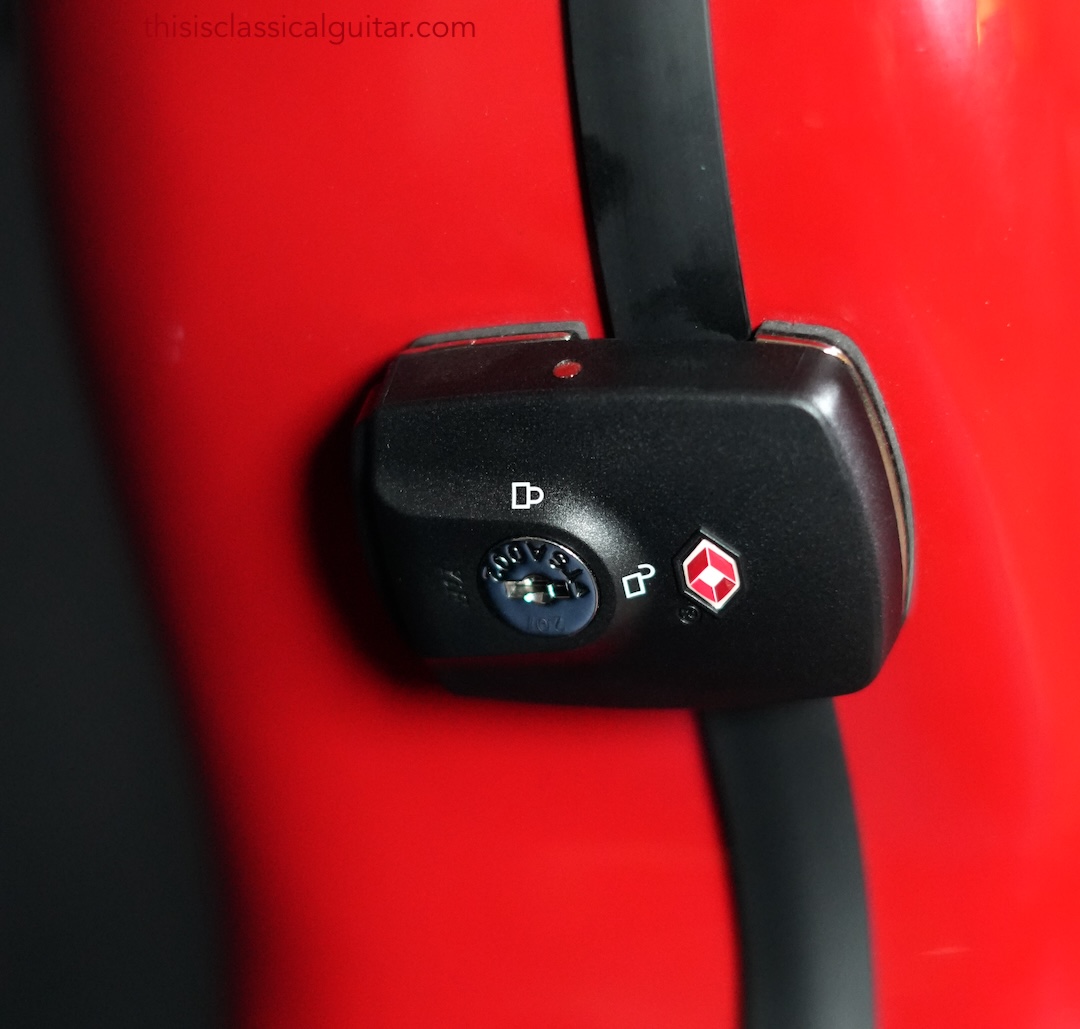
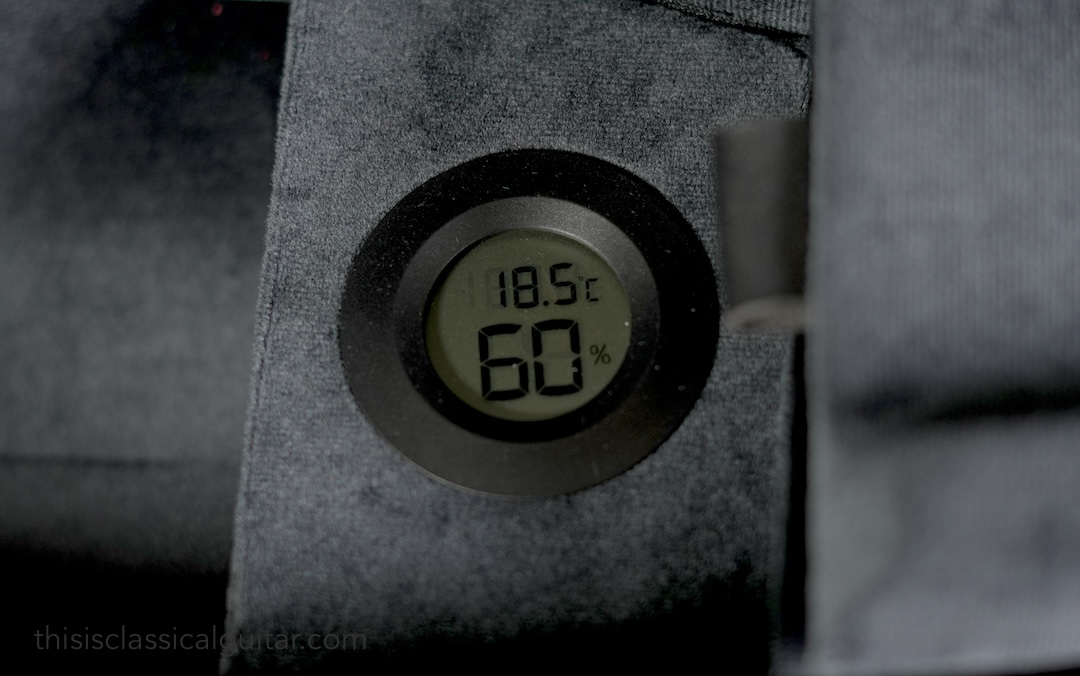
Case – I highly recommend upgrading to the stylish fibreglass case with temperature and humidity meter inside. Looks great, TSA approved lock, well built.
Concerns and Critiques – I have zero concerns or criticisms. At this price the guitar is excelling and is an excellent value. The design options and responsiveness are too good to find fault.
I do have a suggestion or question. For a minimal increase in price I wonder if French polish just on the top soundboard would elevate the tone of the guitar to a level where I’d compare it to higher end guitars? I’ve been told the lacquer finish on the top is specifically thin and honed for this consideration. They’ve done an excellent job. Nevertheless, I’d be curious if it could help with only minimal extra cost.
vs Competitors – As I review more guitars I begrudgingly need to clarify which ones I actually would recommend to my own students. These newer boutique style guitar brands are so impressive that I’ve made a number of positive reviews which has caused a lot of choice and debate. The most obvious competitors to the Sylvia from my reviews is the Cordoba C10, C12 and the Saers A50, and A90. I would say the De Cascia Sylvia is a better value than all of them. The Saers A90 is almost twice the price and is a very comparable guitar, maybe a bit bigger sounding guitar, but I would still recommend the Sylvia. The Saers are still a good value but the Cordobas are now out of the game. Although I still like the balance and tone of the C12 (minus its half-baked raised fingerboard), the De Cascia is keeping up if not exceeding it in quality and design for a much better price. Forget the C10 which is pretty much the same price and not near the quality. I can’t say what is best for you personally, but I know I will be recommending De Cascia often.
Final Thoughts
I had played two Sylvia’s prior to this review and was blown away but I never knew if it was the space I was playing in or if a comparison to competitors would disappoint. That is why I’m so happy I was able to play this guitar for the past few weeks to really get to know it and confirm its quality. I will also say that I have heard the Sylvia in a proper concert hall and it performed incredibly well next to much more expensive guitars. In fact, I was at a chamber music concert not long ago and a colleague of mine played it with strings and flute with much success (interesting since he owns numerous high end guitars and choose to perform on his Sylvia). There are limits to my praise, I won’t be selling my Scott or Dominelli (4 times the price), but in terms of value this guitar is excellent.
For questions or more measurement please feel free to contact me.
Specifications
- Model: Sylvia
- Scale Length: 630 mm (also available in 640mm and 650mm)
- Nut Width: 51mm (or 52mm nut width)
- Soundboard: European spruce
- Bracing: All-wood lattice bracing
- Back & Sides: Solid Indian rosewood
- Neck: Elevated African mahogany neck with ebony reinforcement strip
- Fingerboard: Ebony, with 20th fret
- Features: Armrest and sound port
- Tuners: Der Jung, 18:1 gear ratio
- Finish: Full lacquer finish
- Case: Hard-shell case included
Additional Videos
Cedar vs Spruce Comparison
Below are some video performances of the cedar and spruce Sylvia via Grand Guitar Salon on their YouTube. Again, you can contact the owner Paul at De Cascia to discuss this choice or send me an email if you like.
Learn More or Buy
- Visit De Cascia Handcrafted Guitars & Cases – Montreal, Quebec, Canada
De Cascia Sylvia Photos
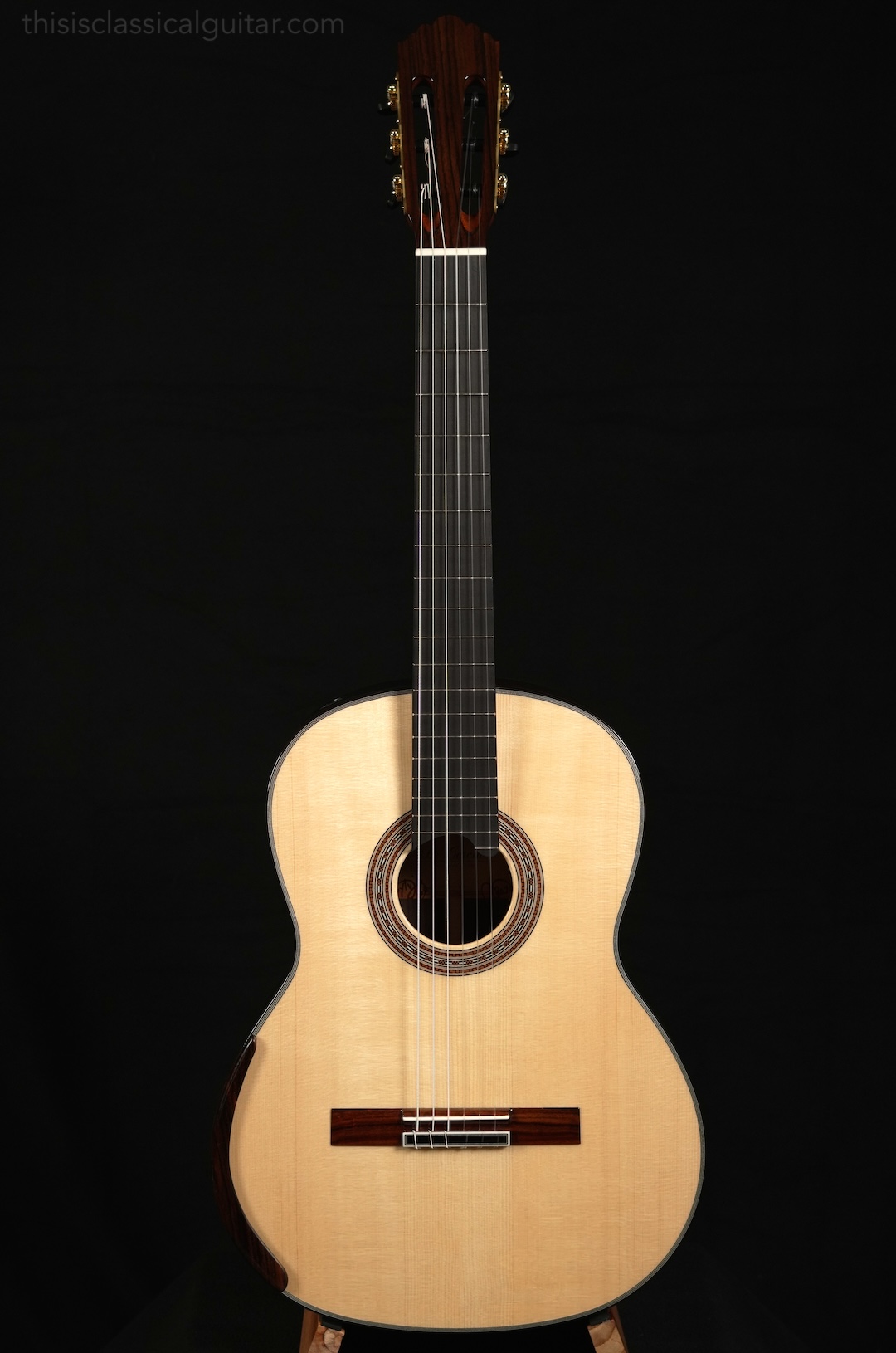
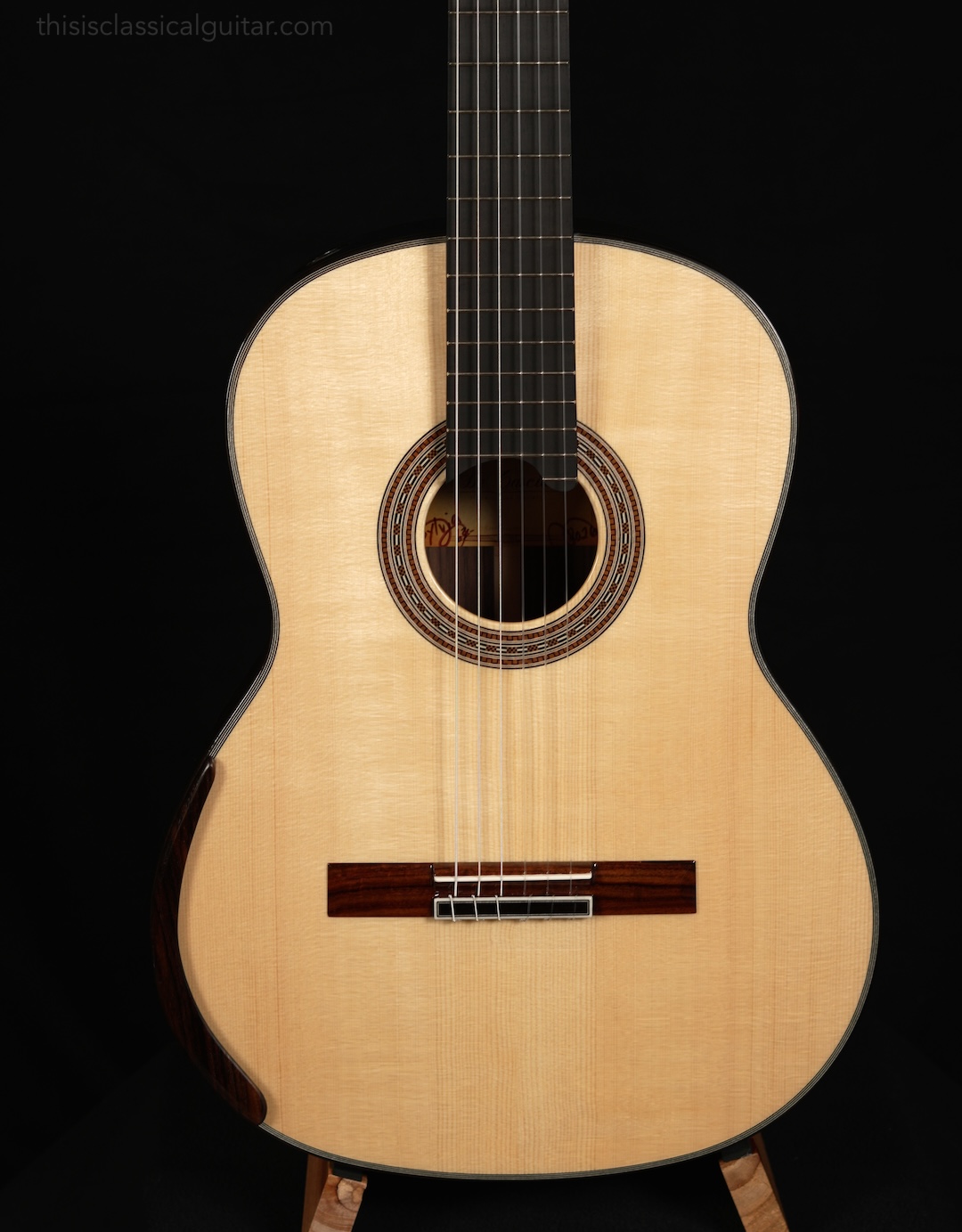
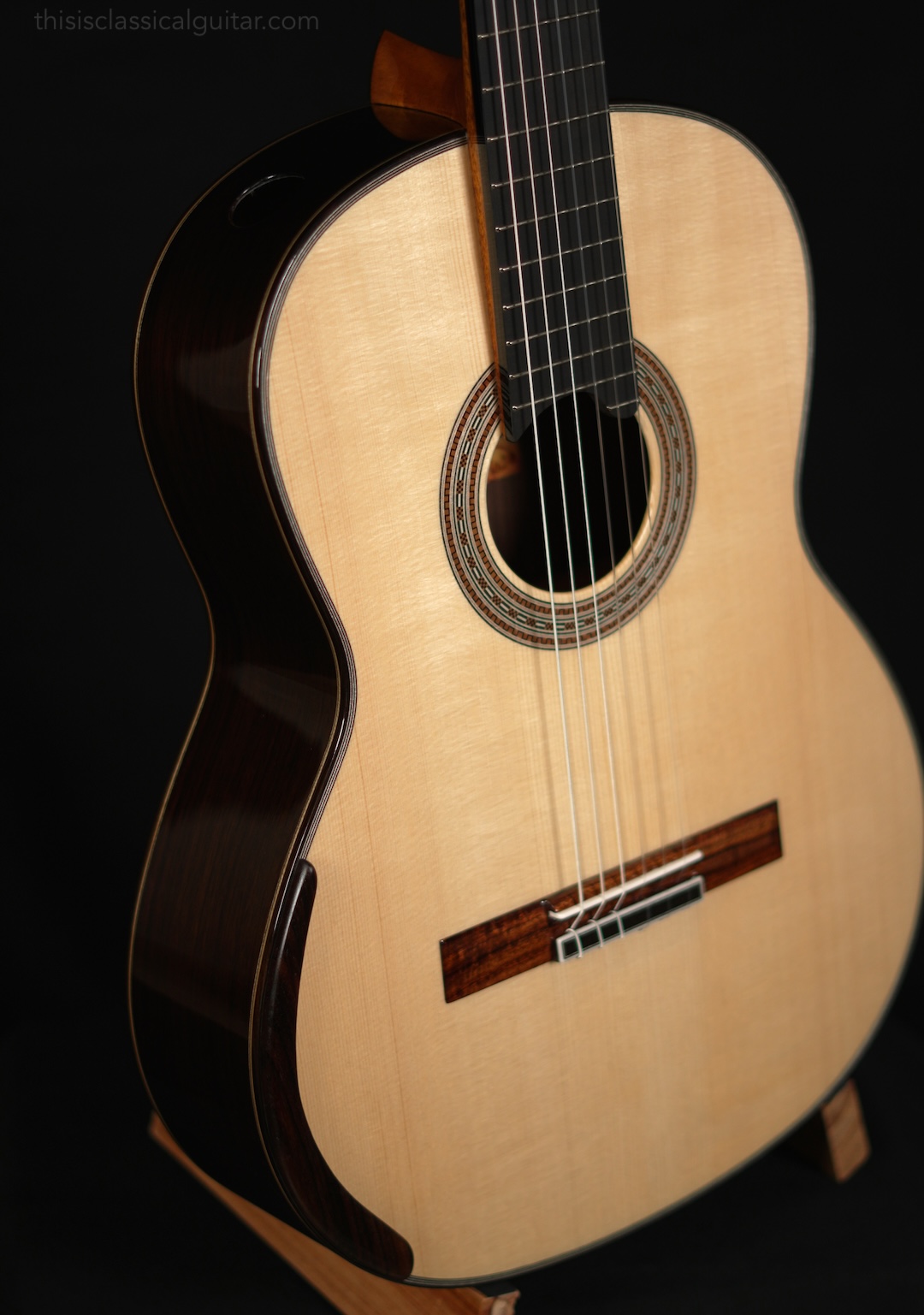
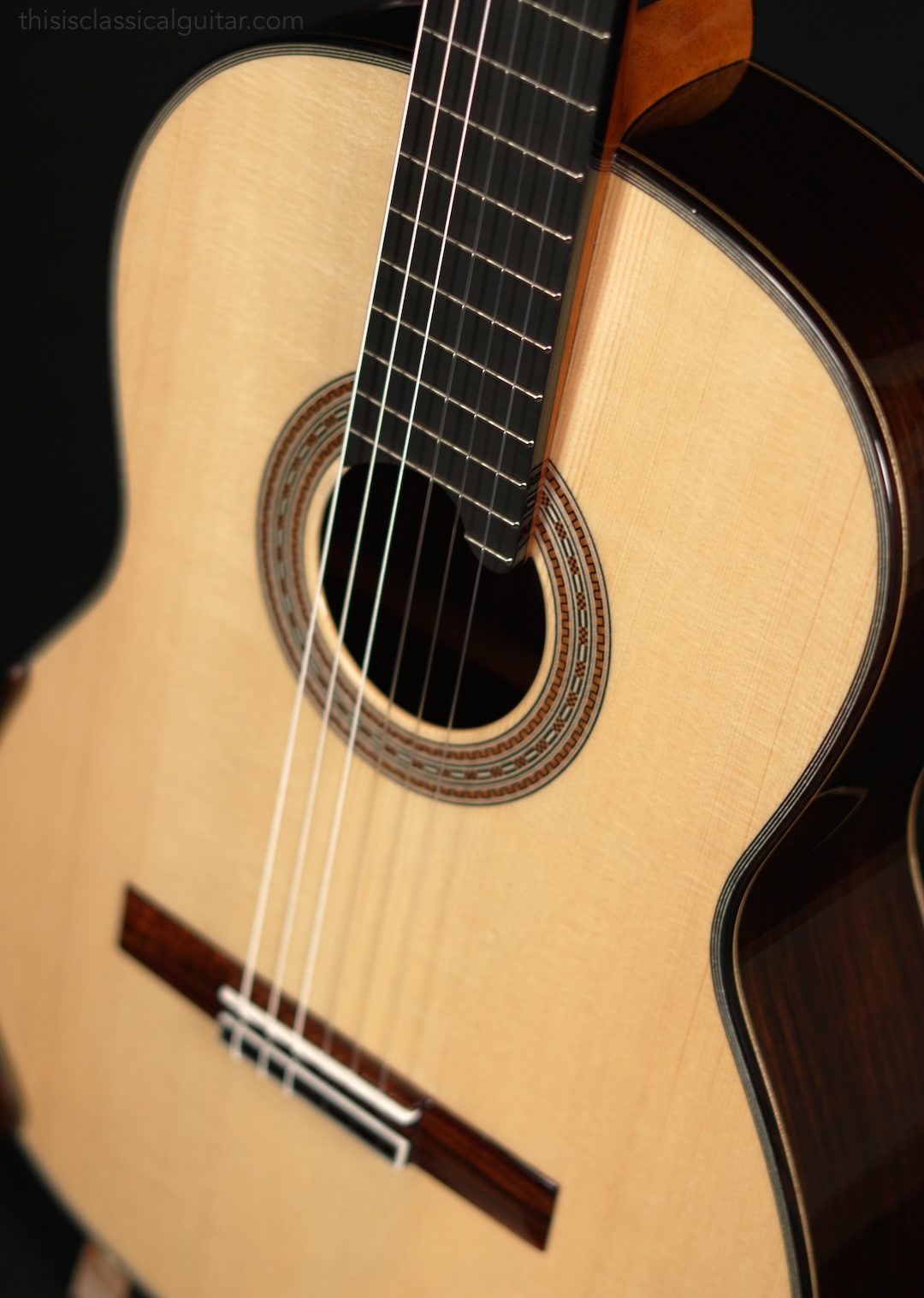
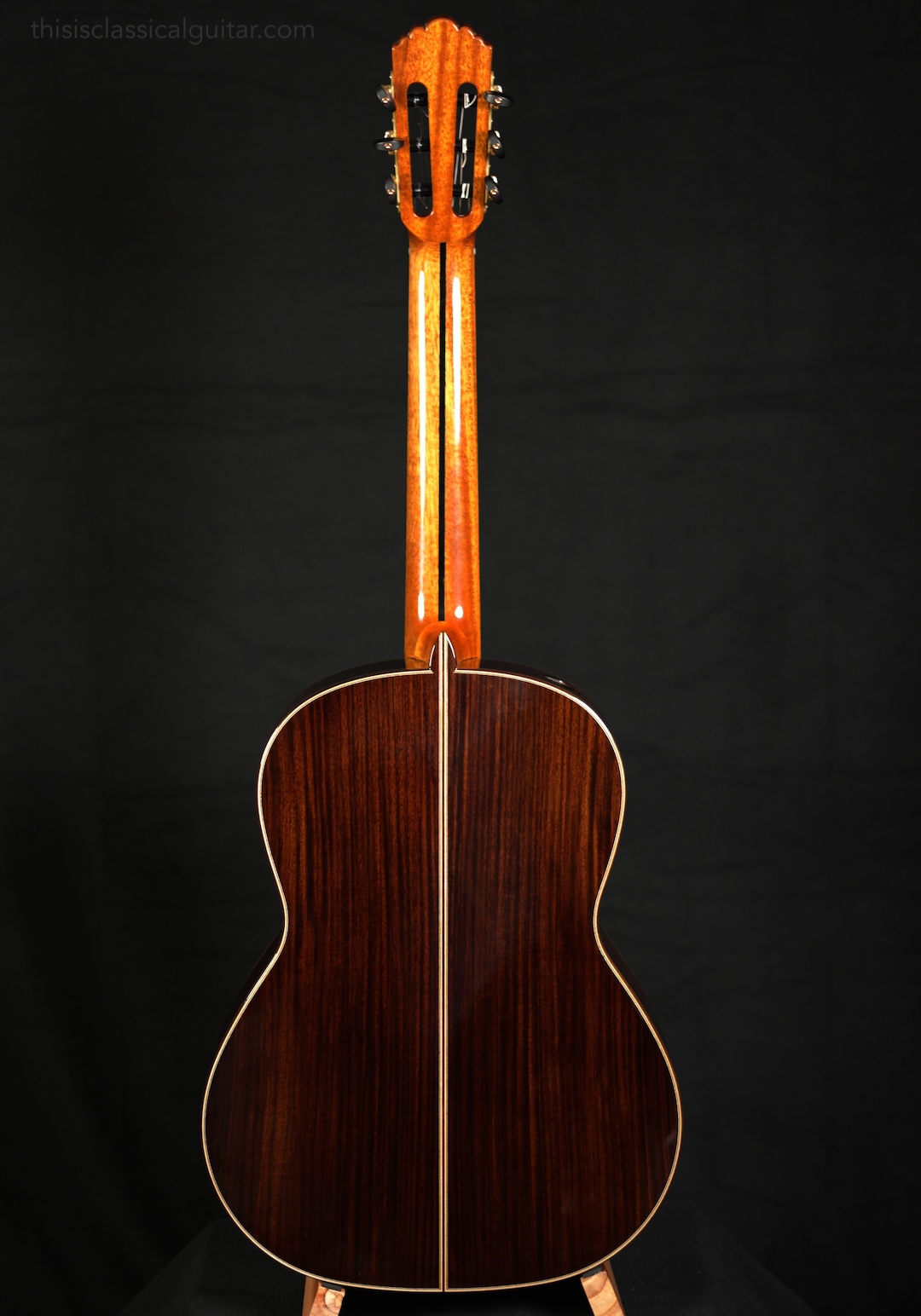
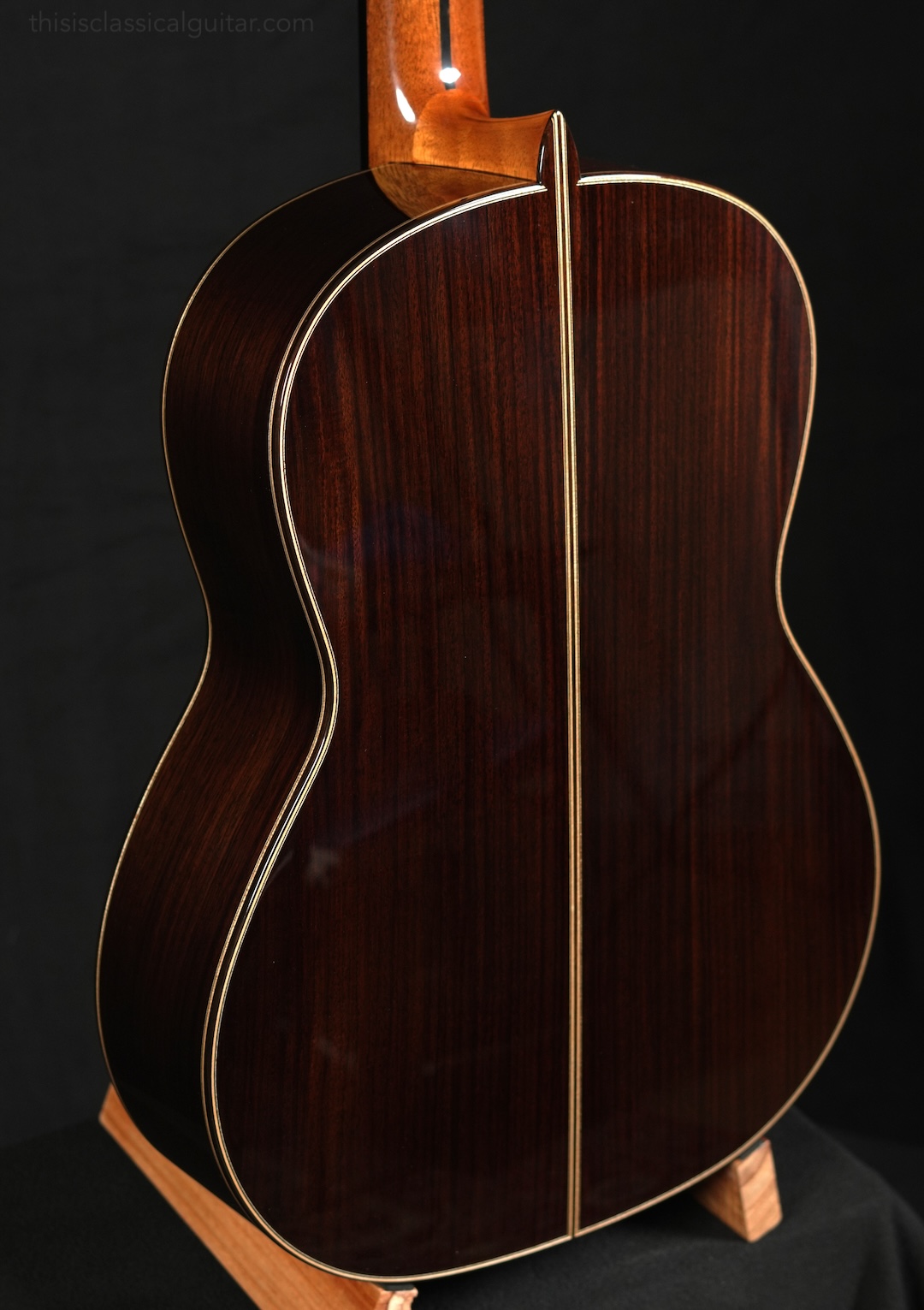
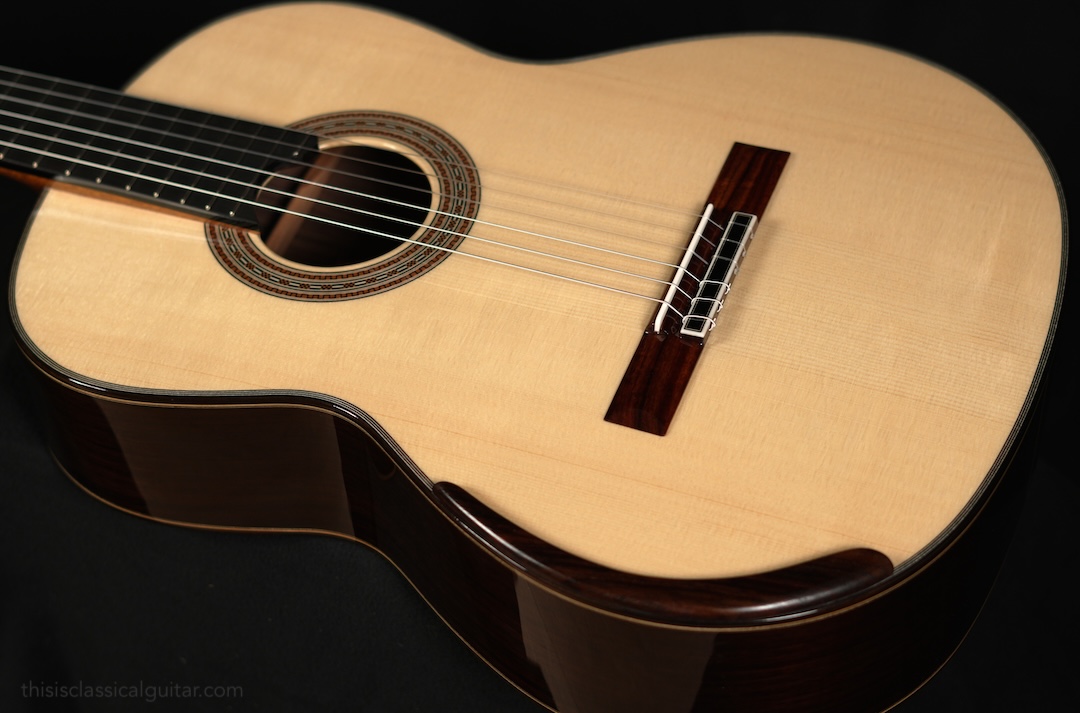
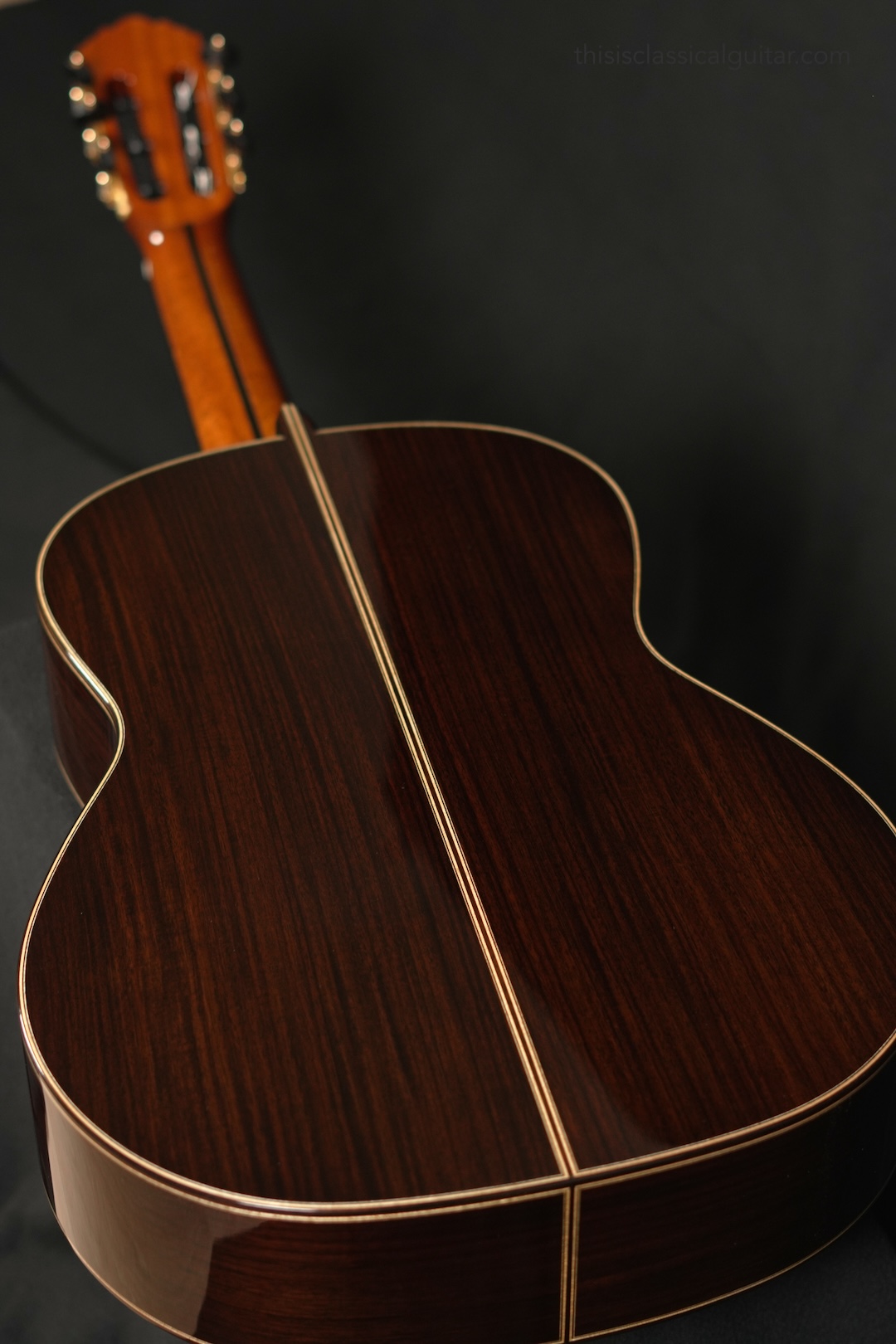
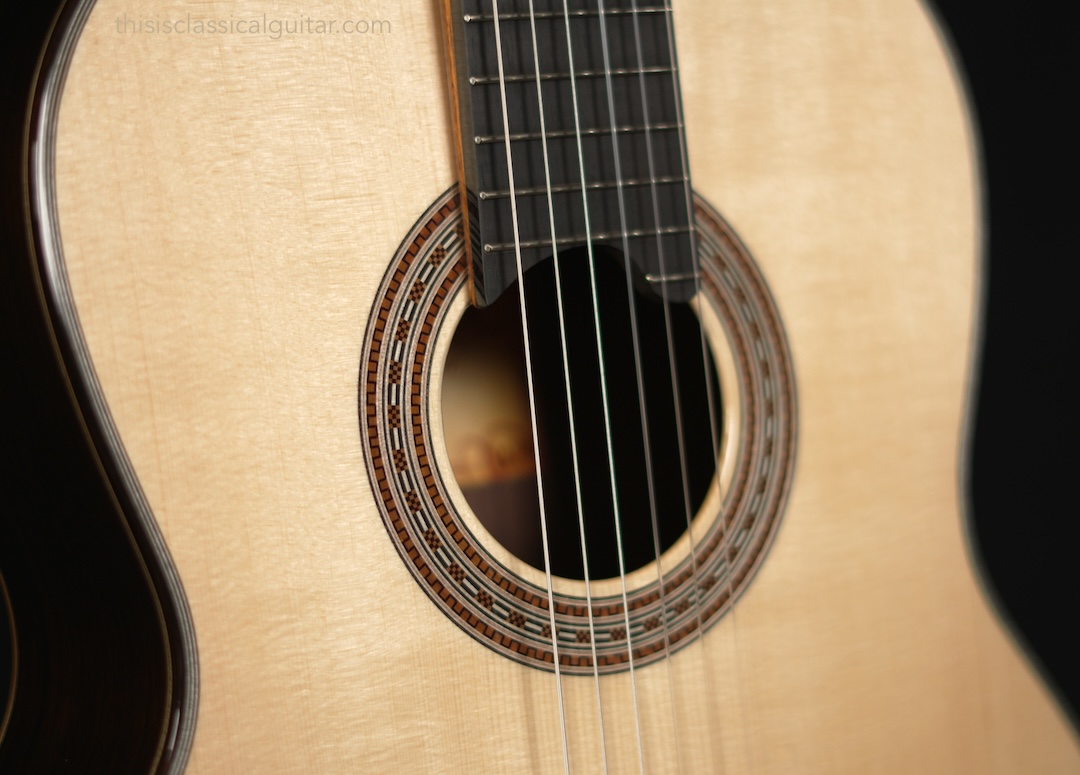
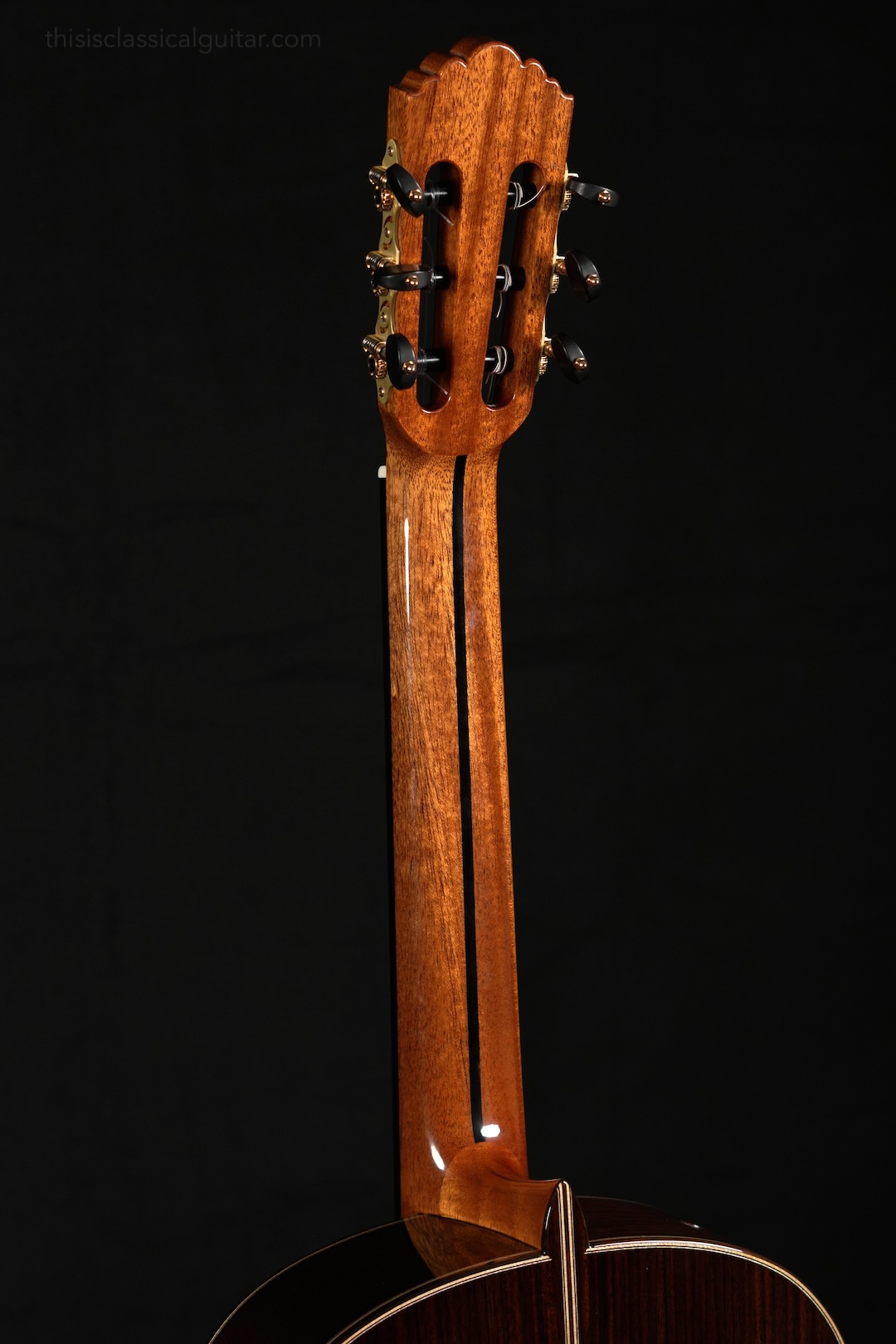
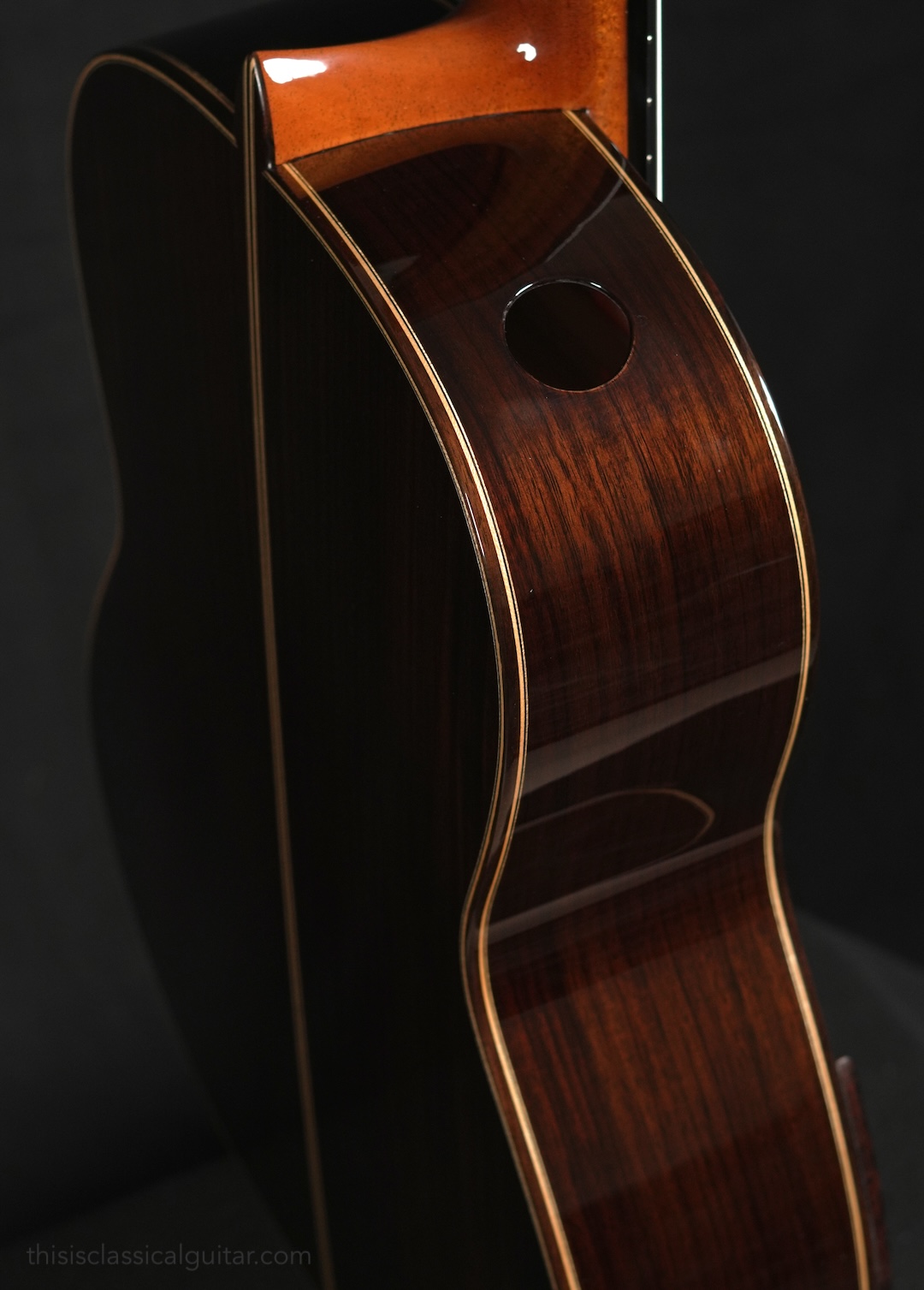
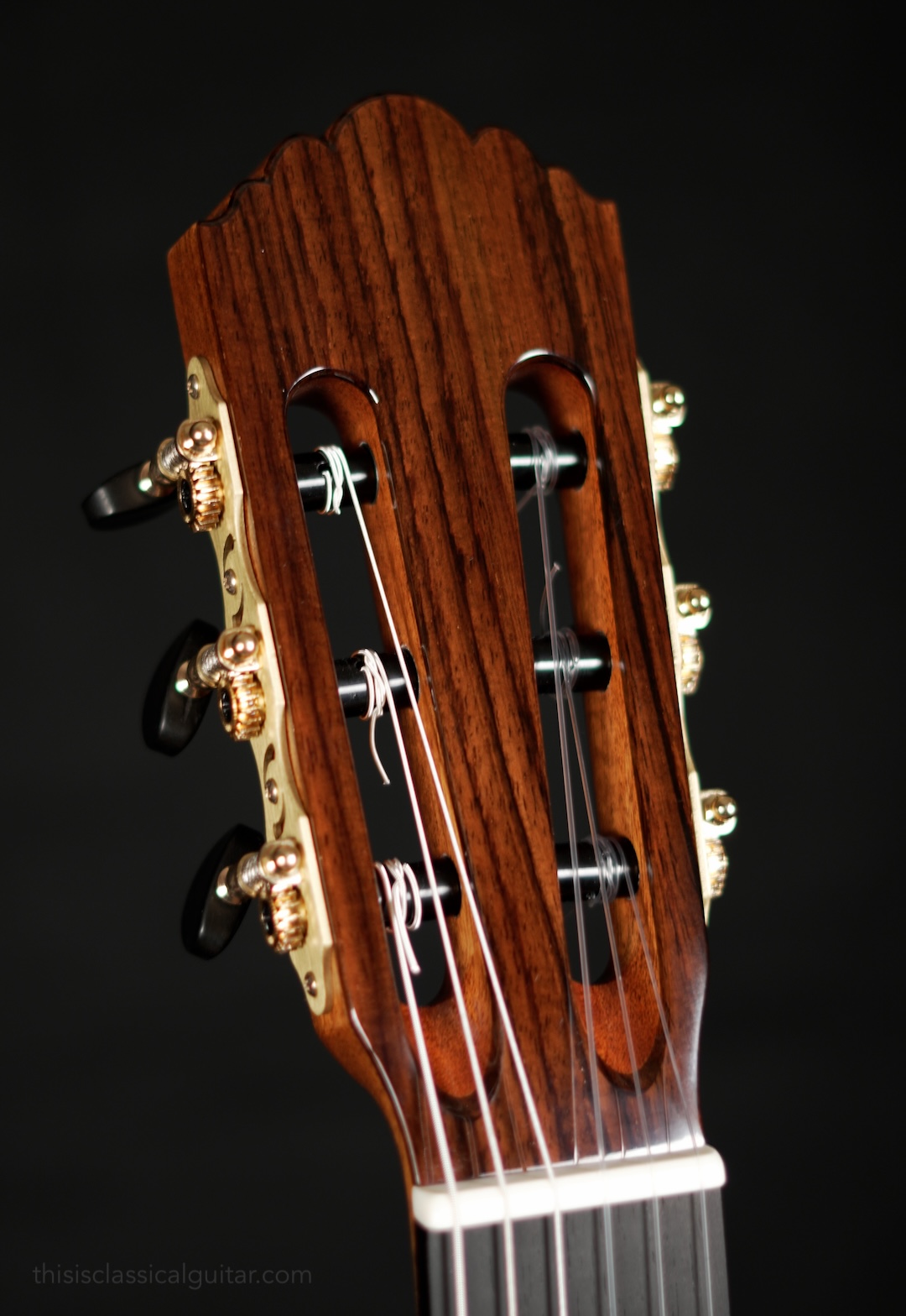
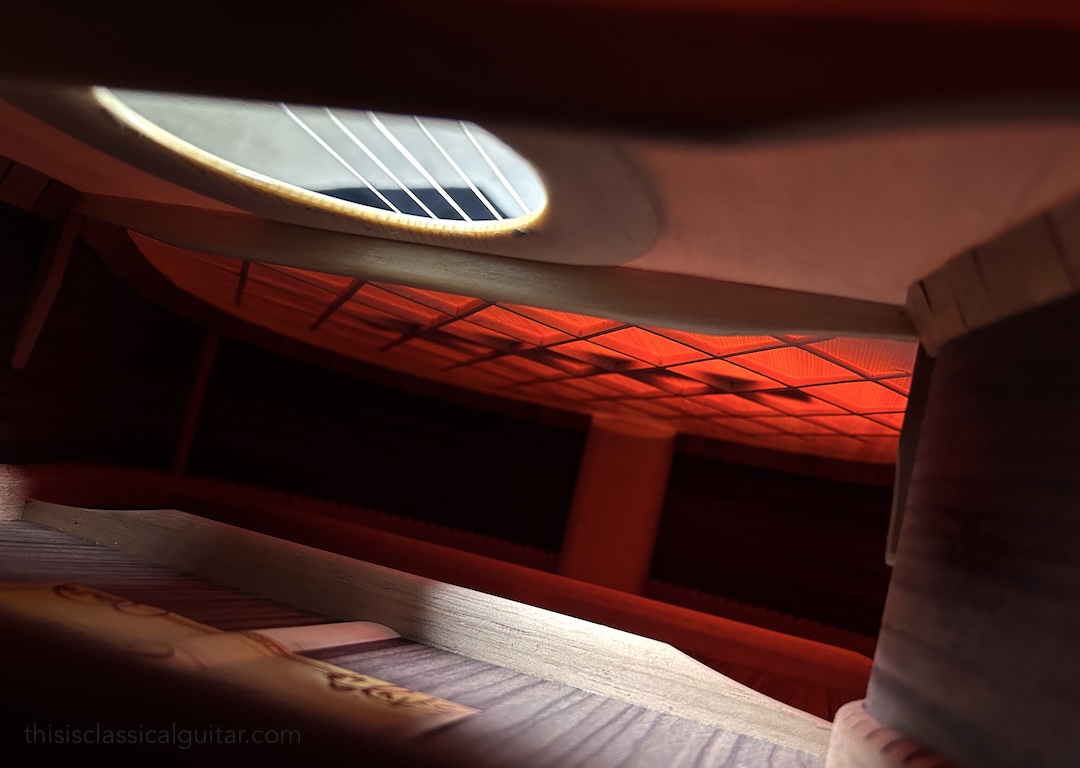
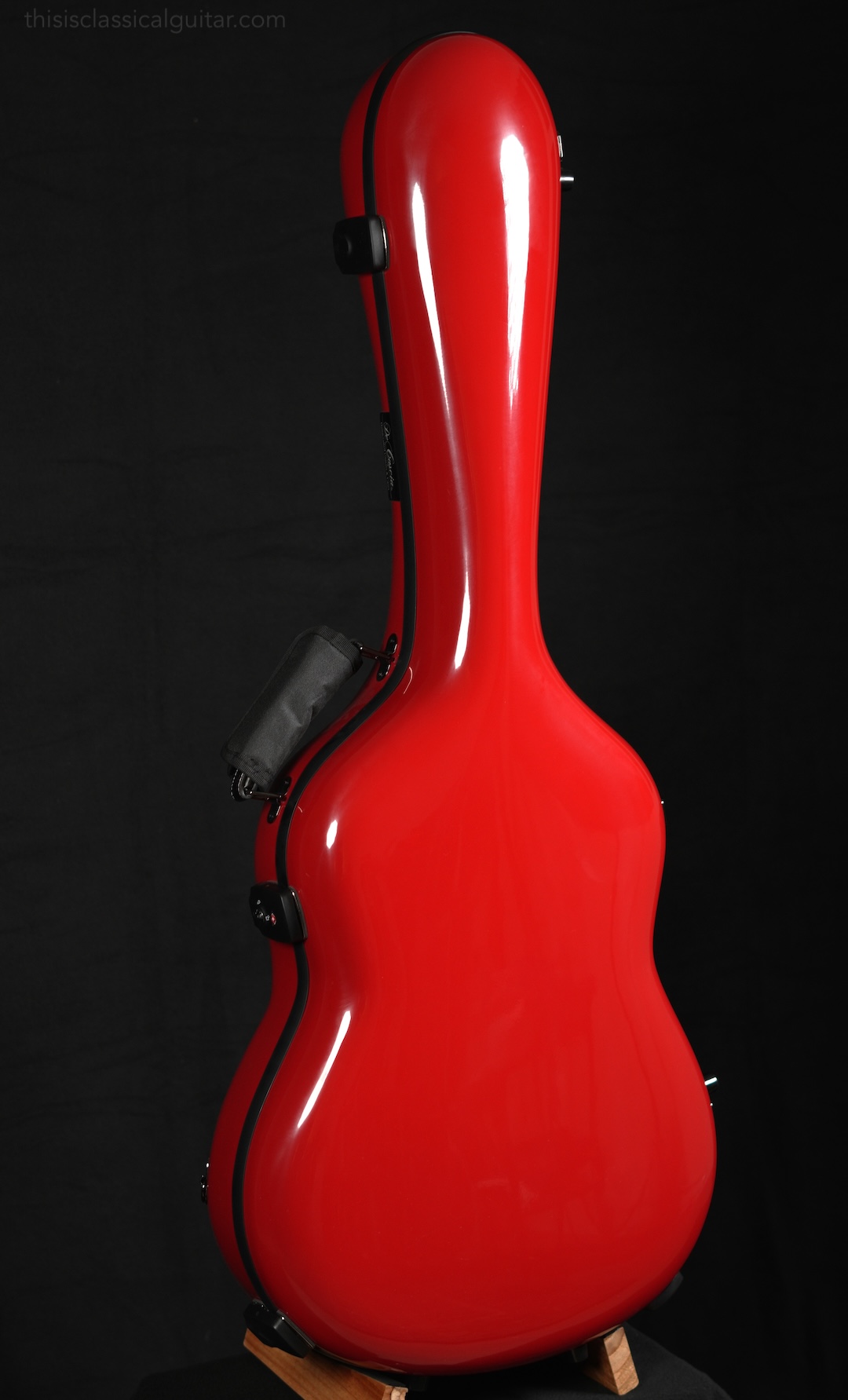
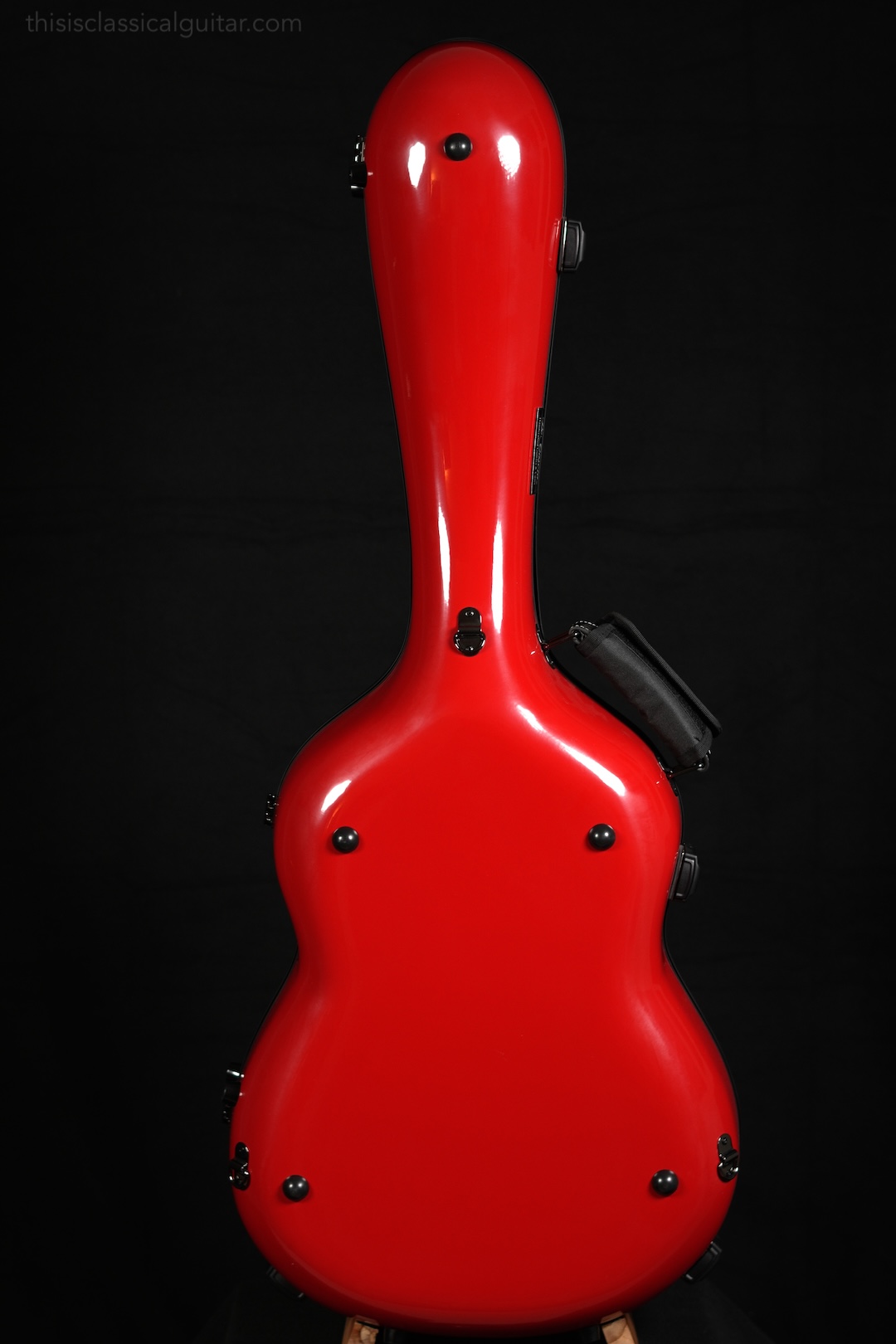




Thanks for this review!!! I wish it had been here last November.
I bought my Cedar Sylvia 630 in Jan’26 based on specs, Youtube videos from Grand Salon de Guitarre and info on the DeCasia site and conversations w/ Paul.
I couldn’t be happier.
Each guitar is different, on arrival, the action on mine was almost 5mm (low E). After a month in my study it was just above 4mm. I had a luthier/builder lower it to 3.7mm which improved the playability immensely, and I had him replace the strings. Mine came with Savarez hard tensions with carbon alliance trebles. On Paul’s recommendation we changed to full set of Knobloch Erithacus EDC 34.5 Carbon High Tension.
Now I’m experimenting with a D’Addario nylon hard tension high E.
The sound is balanced with firm basses sweet mids and bright highs.
My experience is consistent with your assessment. The value of this instrument is 2 to 3 times its price. I feel fortunate to be playing a guitar of this quality for less than $2000.
The Sylvia is in the sweet spot for me with the 630 scale but more so with its 51mm nut and 43mm string spacing (thick fingers). I wasn’t aware of alternatives with these customizations other than luthier-built guitars.
The exchange rate is favorable to us in the U.S. but tariffs were not an issue then. (Not sure about now).
The owner, Paul, was immensely helpful before, during and after my purchase. Promptly answering emails, ensuring clarity, providing valuable advice. He clearly cares about his customers’ satisfaction beyond the purchase date.
Anyway, Bradford, thank you for providing such a complete review, and all the value you bring in your blog.
Thank you for your comprehensive review of the De Cascia Sylvia 630 mm spruce-top classical guitar. It appears that you received an exceptionally high-quality representative of this line of instruments from the dealer in Montreal. In terms of its features that tend to be found on higher-tier guitars, the Sylvia appears to be a good value for the price.
Your comment about the tuners is good advice for future builds. The next step up in the Der Jung series is a significant improvement for only a few dollars more, and I believe that there may also be excellent Rubner tuners at reasonable prices.
Regarding French polish, it is my understanding that the Sylvia had this type of finishing in its earlier releases, but this was discontinued. My speculation is that on balance, customers looking for guitars in this price range might prefer a finish less prone to accumulating dings and scratches, and that the potential gains in tonality and projection is not worth the added cost of French polishing.
You mentioned that you put Augustine Regal strings on the guitar for your review, but that you used a Savarez Alliance 3g fluorocarbon string in place of the nylon 3g in the Augustine set. Which tension of Augustine basses did you pair with the Regal trebles (blue or red), and which tension of Savarez 3g did you use (J = high tension or R = regular or normal/standard tension)?
Finally, does the Sylvia guitar have a truss rod? I did not see this item in the specifications list.
Thanks again for your excellent reviews. An instrument that I hope is on your list for a review in the not too distant future is the JoLuck A8 Marciale 630 mm cedar top. Its features appear quite comparable to the Sylvia; it lacks an armrest, but it has a French-polished top and a truss rod.
I put hard tension Augustines on trebles and basses with a normal tension carbon on the 3rd string.
There is no truss rod.
The Joluck A8 does sound good but is quite a bit more expensive. I don’t know if De Cascia will raise their prices one day but at the moment I think this is hard to beat in this category of price/level.
Do you know how the current tariff situation affects the price of these guitars? Also, would a 630 mm or 640 mm guitar make it easier on the left hand of someone with thumb arthritis?
Thanks for all of your hard work and help
I don’t know about the tariffs but ask the owner (contact on De Cascia website). Funny thing is though that even if the price for this guitar was at par in USD I would pretty much keep the review the same. Even with tariffs it’s still a great deal.
Thank you for the review of De Cascia Sylvia. I notice both the cedar and spruce top versions are available with ‘double tops’. Would you recommend that option?
I have not tried the doubletops yet but I will leave a note or do a review when I do. I’ve heard good things though.
that is my best Guitar , i really love that
That is great to hear, I’m super impressed by it too.