Theory Lesson No.7a: Guitar Clef, Sounding Pitch, Range and Arranging Music. In this lesson we explore what clef is used for guitar notation, the specific sounding pitch of guitar when using that clef, and how range considerations factor into arranging music from other instruments. All the previous theory lessons were needed to reach this discussion.
You can find all the lessons at the Music Theory Lessons page. Here’s the YouTube Lesson link if you don’t see the video above.
The only thing to remember from this lesson: The guitar uses a special clef and sounds one octave lower than written. Don’t worry though, I’ll revisit this again in a future lesson review.
What Clef Does the Guitar Use?
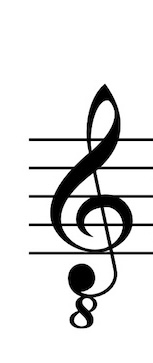
The guitar uses a treble clef with an octave below symbol which is a small 8 under the treble clef. It has various names and some editors might even leave it out incorrectly. Names for the clef can include:
- Octave Below Clef
- Treble clef with an octave below sign
- Guitar Clef
- Octava bassa indication
- Treble Clef Octave Below
What is the Sounding Pitch in this Clef?
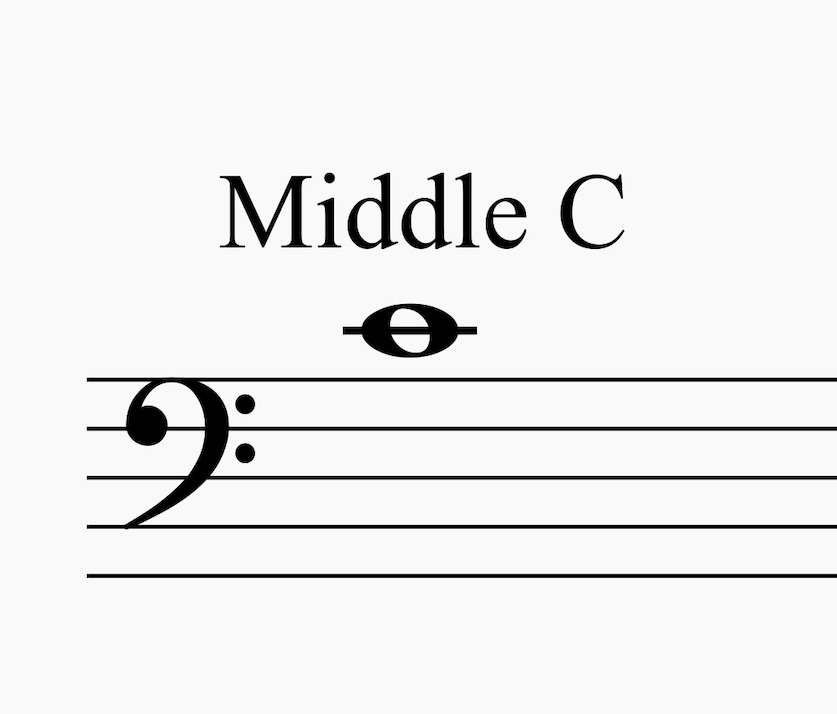
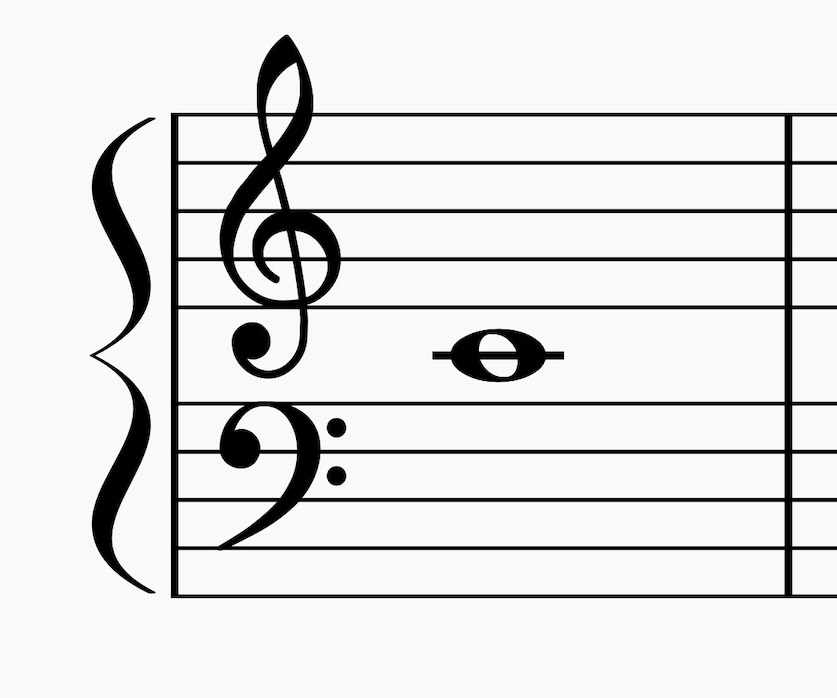
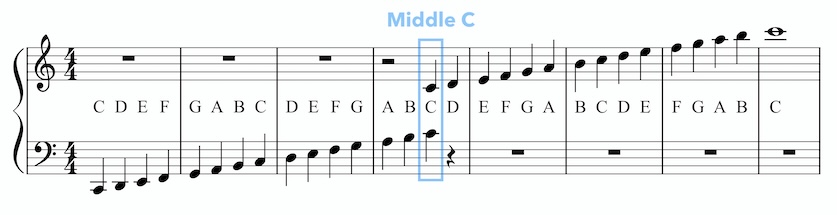
In a previous lesson we learned about middle C as a reference point for pitch and register so let’s use that to match. Here is Middle C on the treble clef, bass clef, and a visual reference to the grand staff.
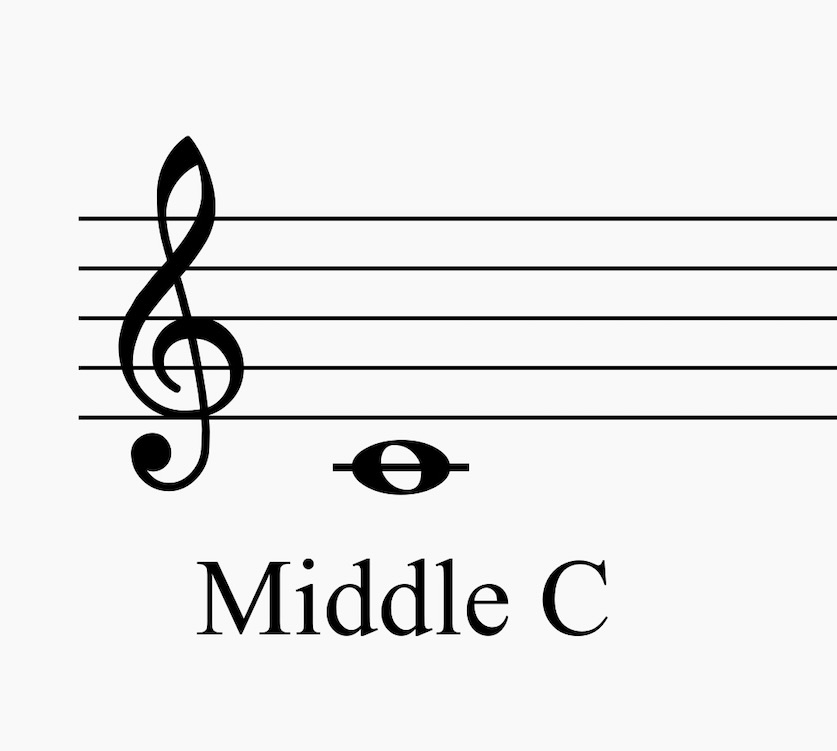
Or for more context, here is middle C within a larger range of notes.
Where is Middle C on the Guitar?
You might think middle C, as pictured below in the guitar clef, is on the 3rd fret of the 5th string. But it’s not. This is not middle C in terms of actual register.
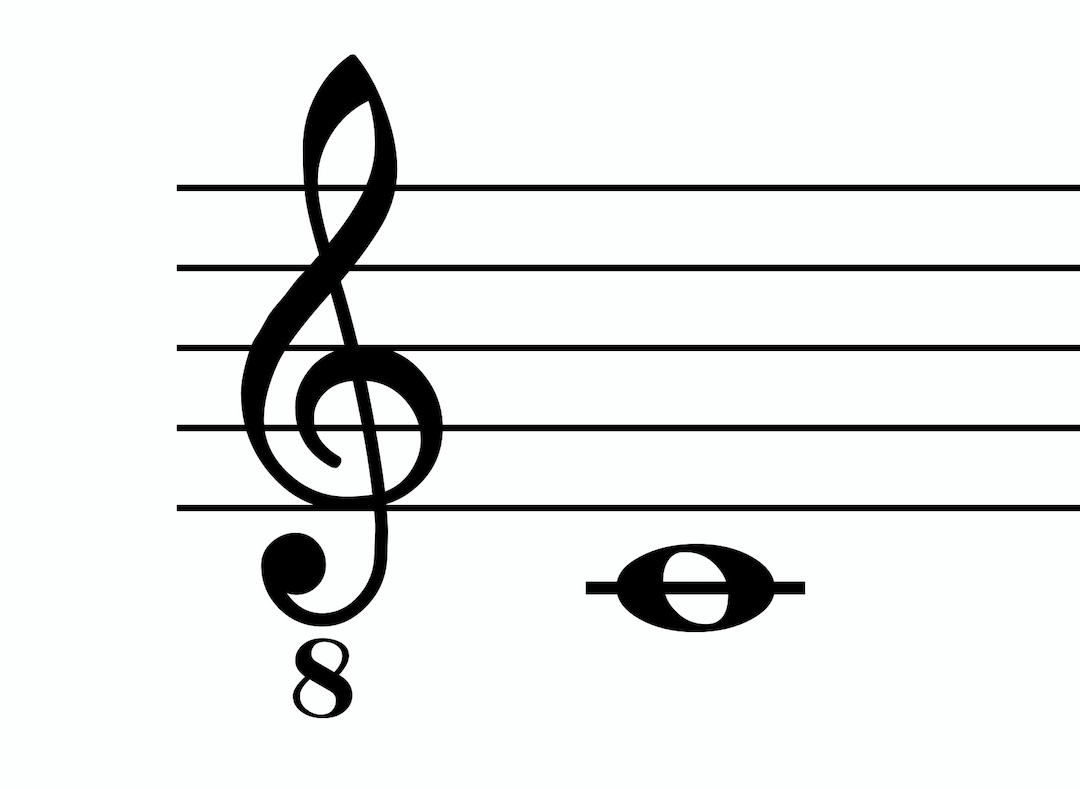
Middle C is played and sounds in the correct octave here on the 2nd string first fret. This is “Concert Pitch” middle C, that is, the actual register of middle C universally.
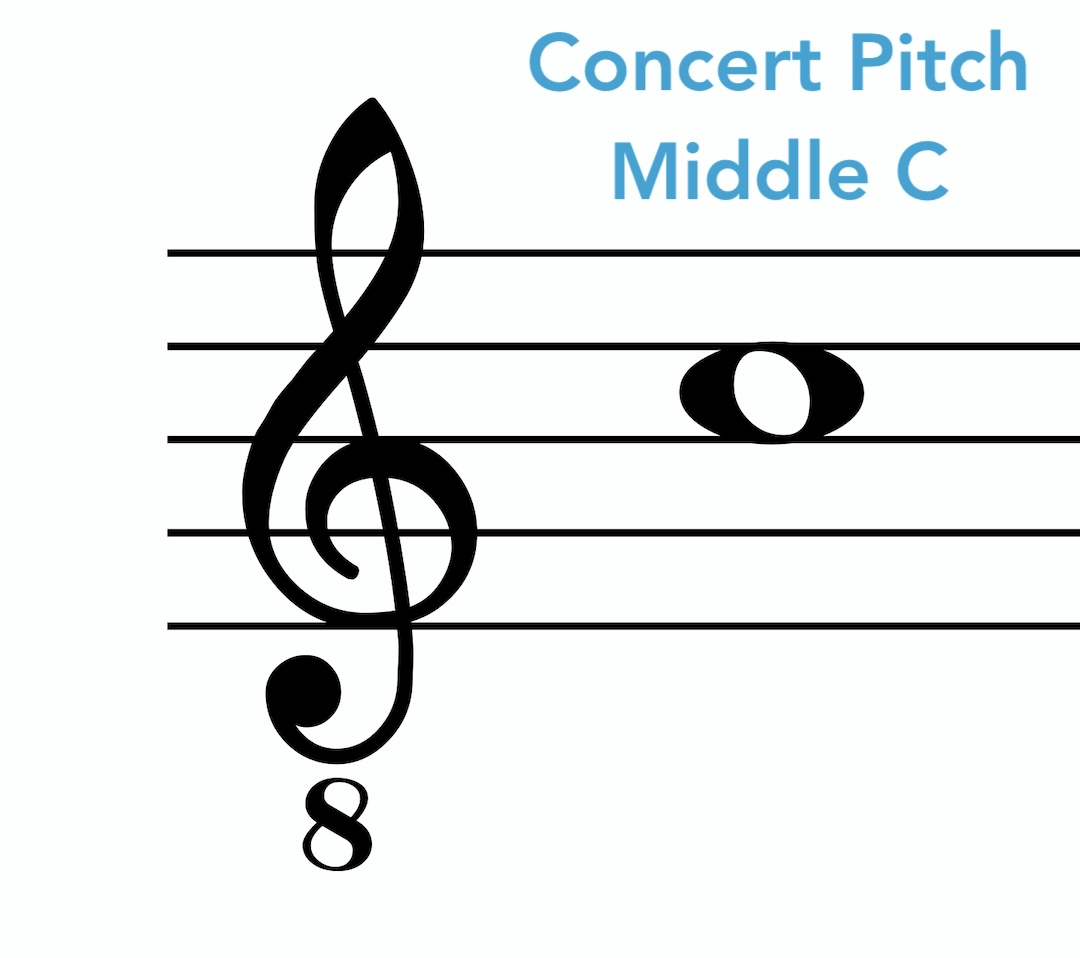
Remember, this is because the guitar uses that octave below clef. So everything sounds one octave lower than written.
Why is this important? Who Cares?
On a day to day guitar playing experience you don’t need to think about this at all. However, when you go to arrange music for guitar, check arranged music to the original, or play with other instruments it becomes very very important.
Arranging Music from Other Instruments
Let’s try to arrange the first measure of this Keyboard Sonata K.132 Domenico Scarlatti (1685-1757).
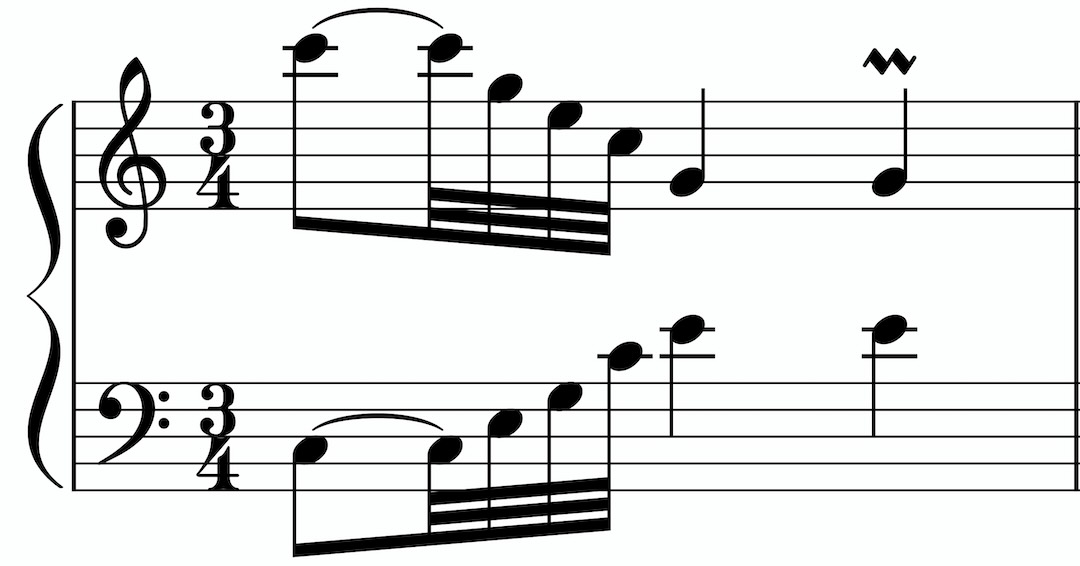
First let’s place the the music into Guitar Clef notation. These are the actual pitches transcribed directly to guitar notation. The first thing we notice is that the top line is way to high to be practical let alone be played along with the bass notes.
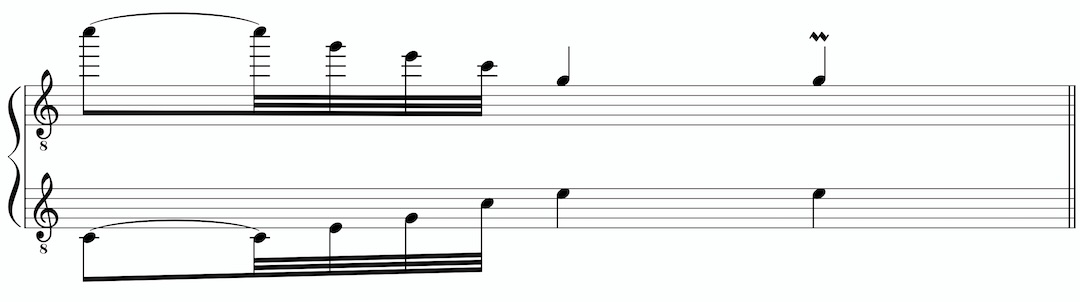
Here it is again condensed to a single staff as we are more used to. This is the actual register of the pitches from the piano music.
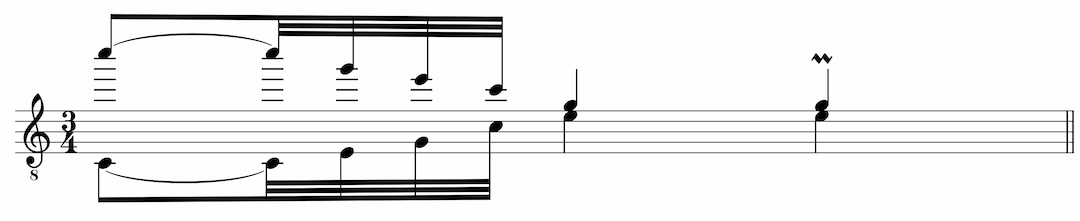
Can’t we just lower the upper line and read it as if it was for guitar? No. If we lower the upper line the voices will cross causing confusion as to what notes are part of what voice. It kills the voice separation. This intensely changes the sound of the composition and would be considered poor arranging. It’s like in Ghostbusters, you don’t cross the lines.

So it can’t be arranged? Our options at this point are to either change the key and hope to find something that works with the original register, abandon the arrangement, or make it for two guitars.
How about the Key of E Major (Lowering the bass to our lowest note)? If I put it into the key of E it kind of works but to be honest the texture is too fast and rapid to be played well on the guitar. So maybe it would work for guitar duo better. If we arrange it for guitar duo we will have to keep the range as the original in order to not cross voices. We might even have to change a few notes later in the work.
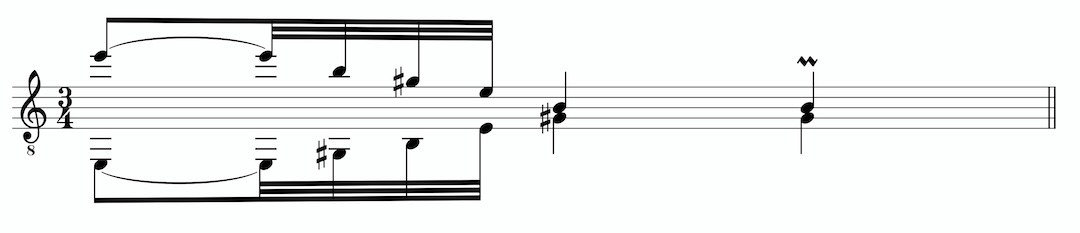
Playing with other instruments
Another reason this is important is when you play with other instruments. If you both play in the same range it will sound muddy and cluttered. If you play in opposite ranges it will be clear. A flute and cello play in very different ranges so they have good voice separation. A guitar and a cello share some range so it is beneficial to create separation.
For example, when I play the melody from a jazz chart, I play it one octave above so that the melody is not down in the register of the bass player, piano, or other guitars. So I play it in the actual concert pitch of the treble clef.
You don’t need to think about this but it will come in handy later
The only thing you need to know right now is that the guitar sounds one octave below written. That’s it, we’ll revisit this in a future lesson on arranging.