
Music Theory Lesson No.3a: The Staff and Introduction to Clefs. In this lesson we will learn about the staff and the idea of clefs as well as how we map out pitches and musical time on the staff. You can find all the lessons at the Music Theory Lessons page. Here’s the Youtube link if you want to watch it there.
The staff (plural staves)
Music notation is written on a staff. The staff has five lines and four spaces.
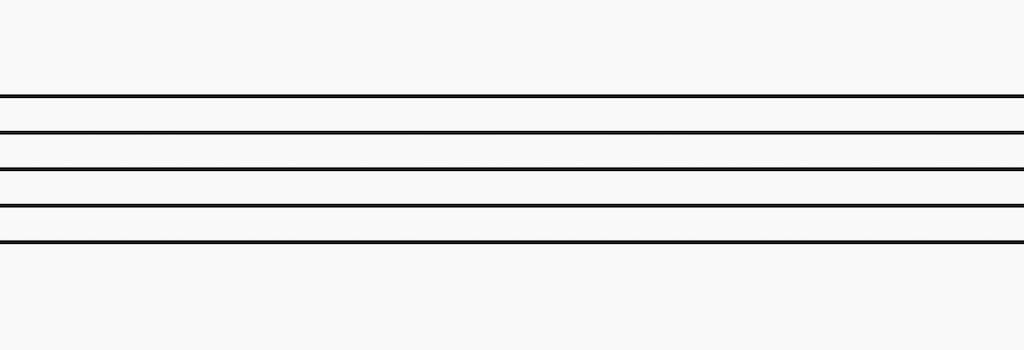
Notes and rhythms can be placed on the lines and spaces of the staff to indicate pitch and musical time.
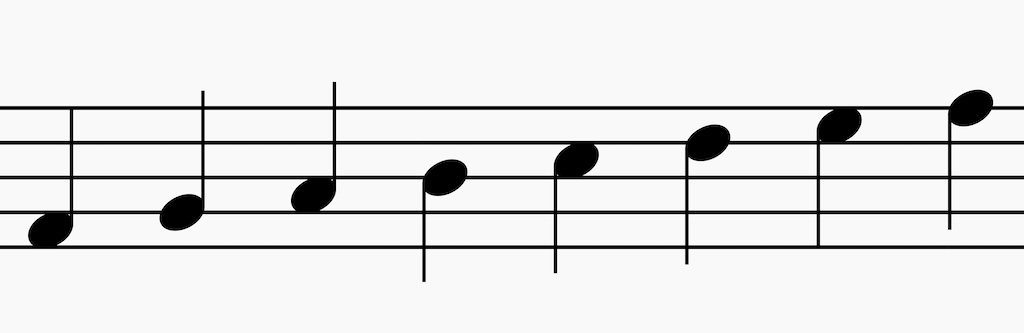
Ledger lines can extend the range and pitch of the staff. In short, ledger lines create more lines and spaces to place notes on which extends the pitch range of the staff.
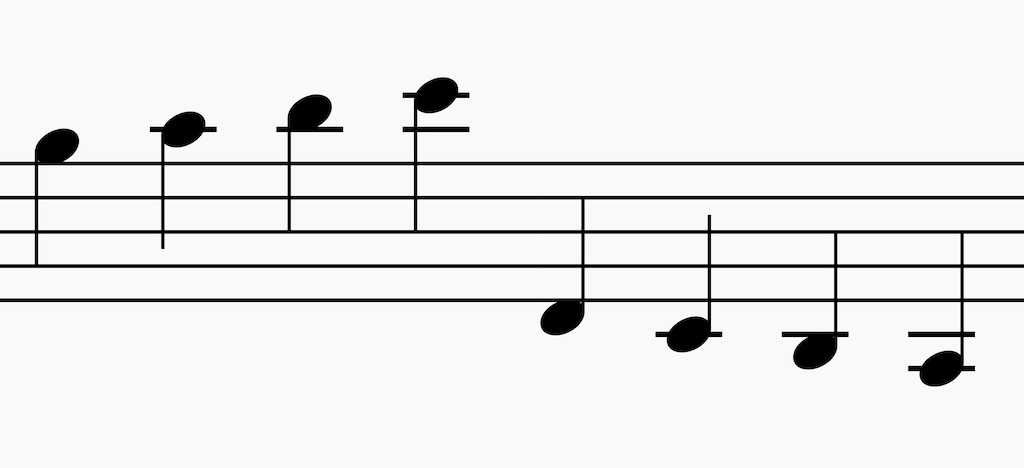
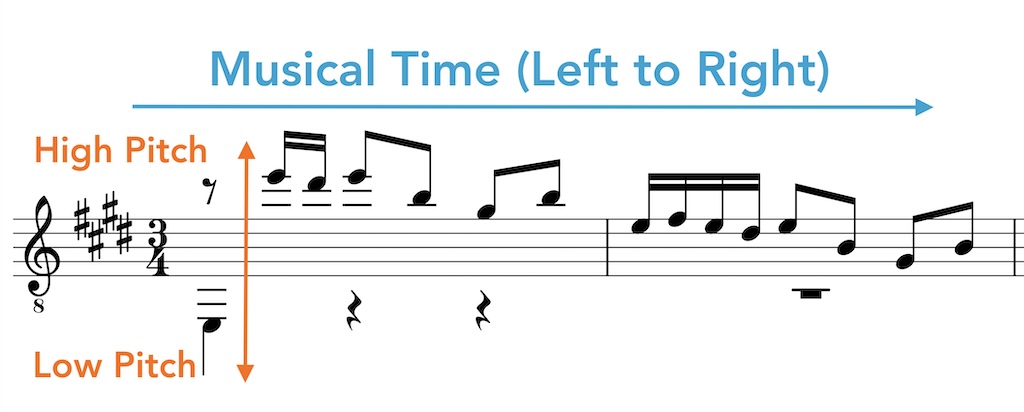
The staff is a visual grid that we use to orient musical time (horizontally) and the highness and lowness of pitch (vertically). Musical time on the staff reads from left to right based on what note or rest is indicated. Notes higher on the staff are higher in pitch. Notes lower on the staff are lower in pitch. Notes on ledger lines extend the pitch range of the staff
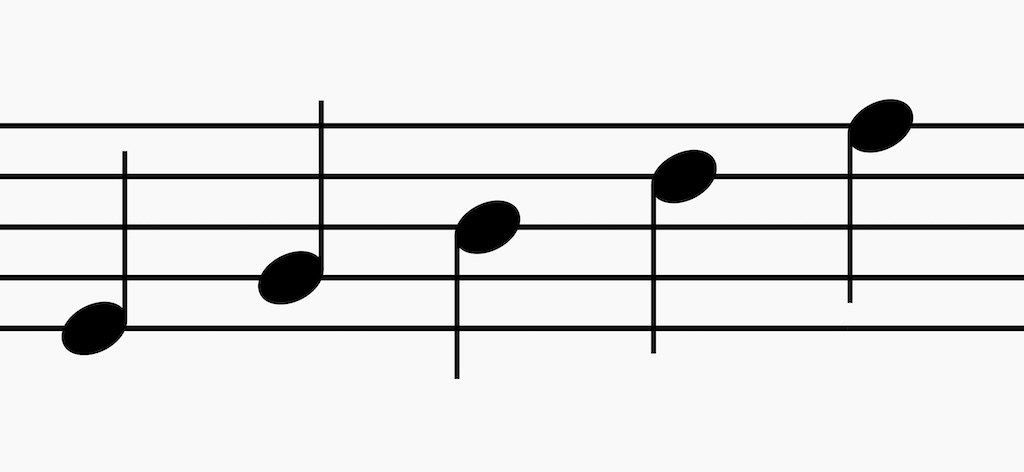
Line Notes – For a basic orientation, here are some notes on the lines of the staff. Notice that the notehead (the circular part) goes through the centre of the staff line.
Space Notes – Notice how the notehead is placed between the two lines in the space of the staff.
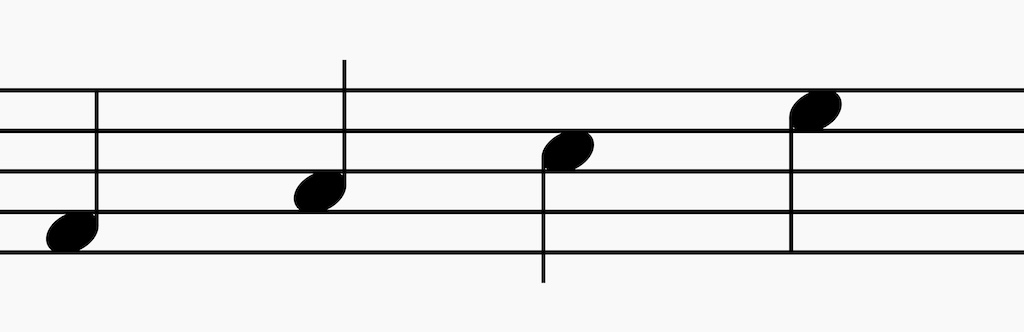
Notes on lines and spaces – Here are some notes on both lines and spaces in order.
Clef
The Clef is a symbol placed on the staff to show the range of the pitch and the exact pitch represented by each line and space on the staff.
Different instruments and voices produce pitches in different ranges. The cello plays notes in a low range. The flute plays notes in a high range. There are many clefs to indicate these ranges.
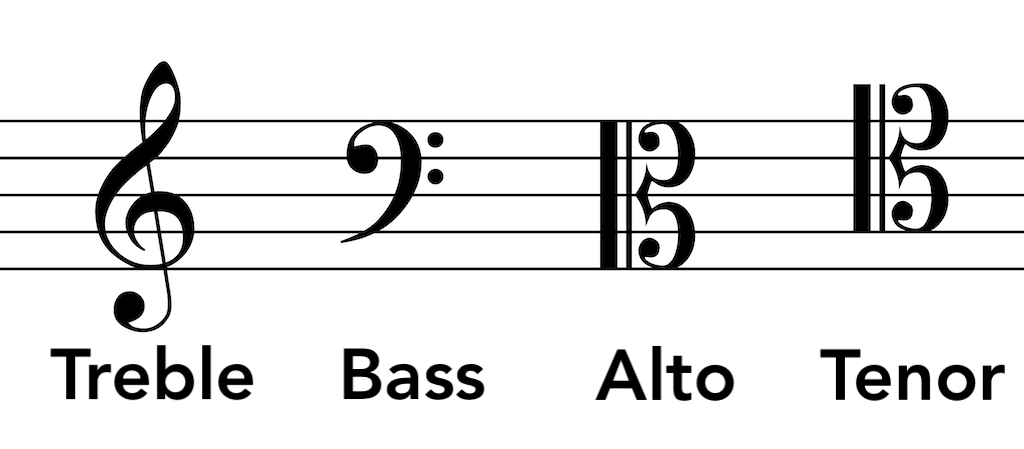
We’ll be focusing on just two clefs for the first little while: the treble clef and the bass clef.
The Treble Clef
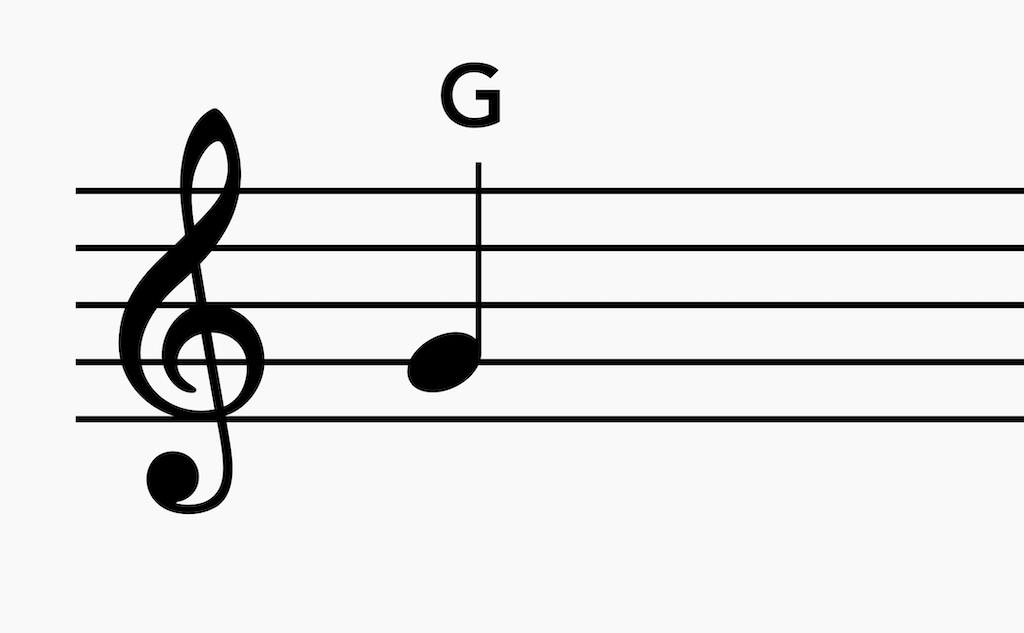
The treble clef (also called the G clef) indicates the location of G on the 2nd line from the bottom. For example, a soprano voice or a flute produce notes in a high range and use the treble clef to indicate notes on the staff. This tells use that the range is generally high and it also tells us what pitch is assigned to each line and space of the staff.
This image shows how the treble clef indicates G on the 2nd to bottom line.
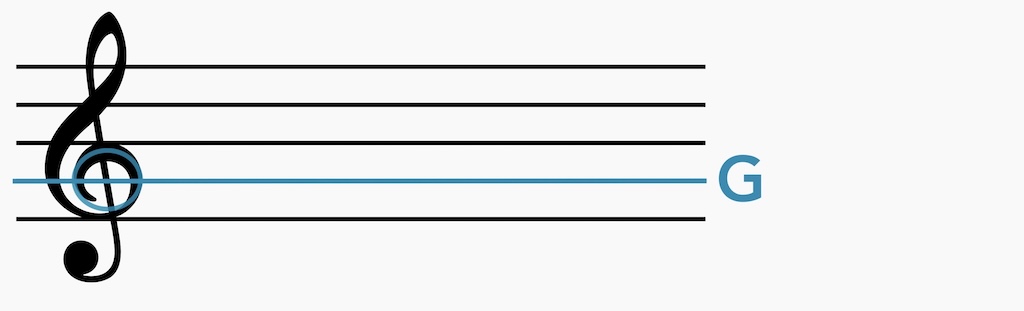
Here is the note G occurring on the same line as above.
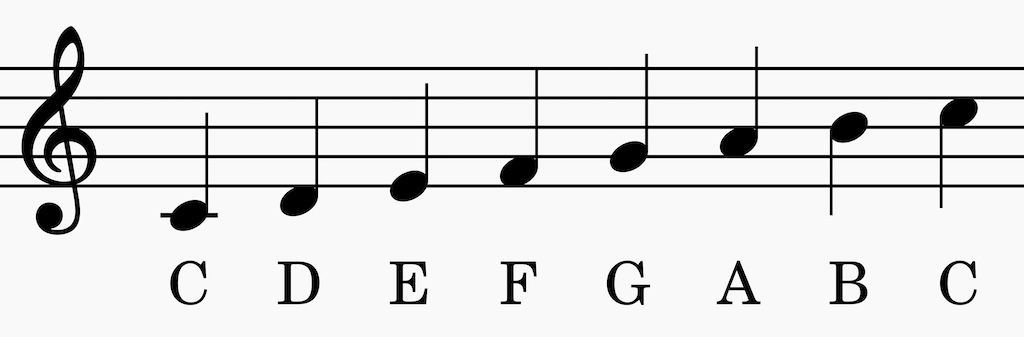
You can see in the below image, the musical alphabet works in order when we place notes on each line and space of the staff with G as a reference point. This is a C major scale.
The Bass Clef
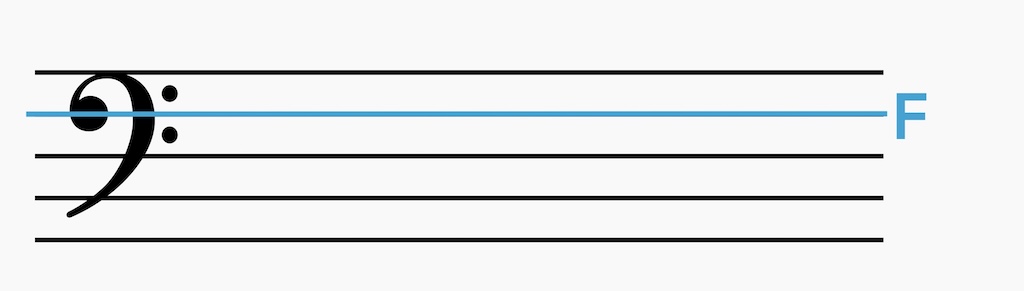
The Bass clef (also called the F clef) indicates the location of F on the 4th line. For example, a lower bass voice or a cello produce notes in a low range and use the bass clef to indicate notes on the staff.
This image shows how the bass clef indicates F on the 4th line from the bottom.
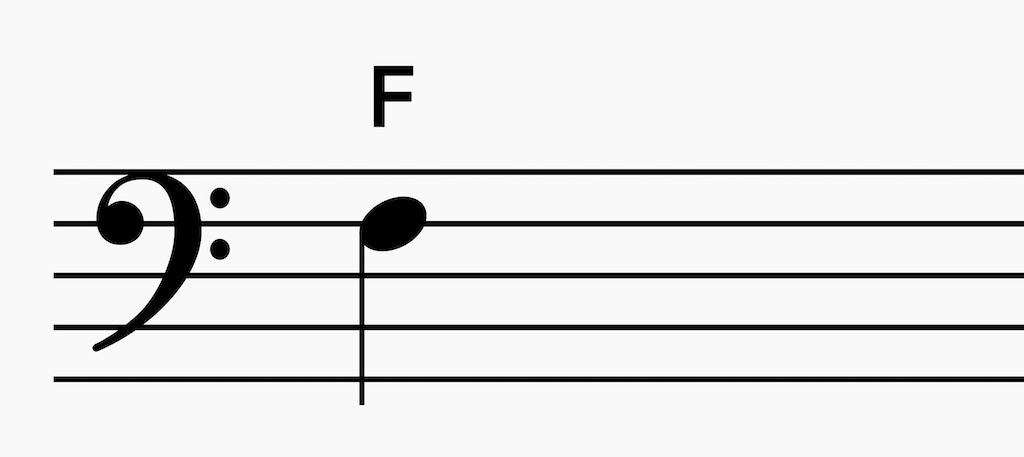
Here is the note F occurring on the same line as above.
You can see in this image that the musical alphabet works in order when we place notes on each line and space of the staff with F as a reference point. This is a C Major scale.
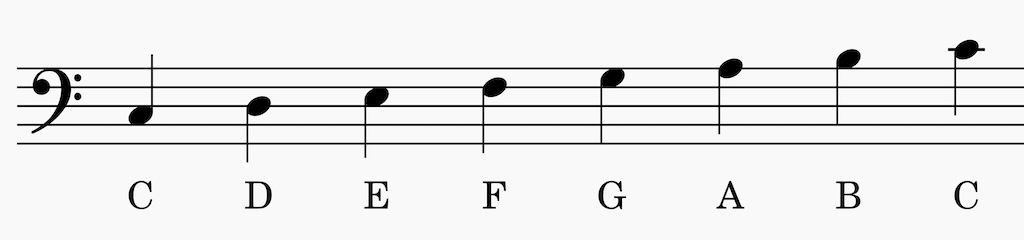
You don’t have to remember any specifics for now.
The only thing to know for now is that the clef is placed on the staff to show the general range and the specific pitch represented by each line and space on the staff.
You won’t have to worry about it while playing guitar because you’ll only be reading the treble clef and you will simply get to know it super well without thinking about this.
Summary
The staff, in conjunction with a clef, allows musicians to know the range and specific pitch represented by each line and space on the staff as well as musical time and rhythms reading from left to right.
In future lessons we will look at pitch classes and the grand staff to understand how the different clefs form all the commonly used pitches in music.
Hope you found that helpful. Find more theory lessons on the Music Theory Lessons page. I’m offering these lessons free of charge but feel free to support the site here. If you need any clarification on this particular lesson please leave a comment below.

I’m a very late starter sight reading. These lessons make things clear and easy to understand