Theory Lesson No.5a: Grand Staff, Middle C, and Octave Indications. Middle C is important mainly because it serves as a common reference point in music, notation, and instrument orientation and visually connects the treble and bass clefs. The grand staff allows us to analyze music containing a large range of pitches in the two most common staffs used today. Octave indications allow us to keep the notes more within the staff itself instead using large amounts of ledger lines. You can find all the lessons at the Music Theory Lessons page. Here’s the Youtube link if you want to watch it there.
Please note: Octaves will be discussed in a later lesson, today is just a basic discussion about the indication to play notes higher or lower.
Despite the large number of clefs possible, the treble clef and the bass clef have become the most widely used clefs in modern times. It is essential that you learn both even as a guitarist. It will allow you to understand a vast variety of musical examples and theory. As a guitarist it will also allow you to check over arrangements of piano and cello music or the understand everything from chamber music scores to jazz charts.
Middle C and Early Clefs
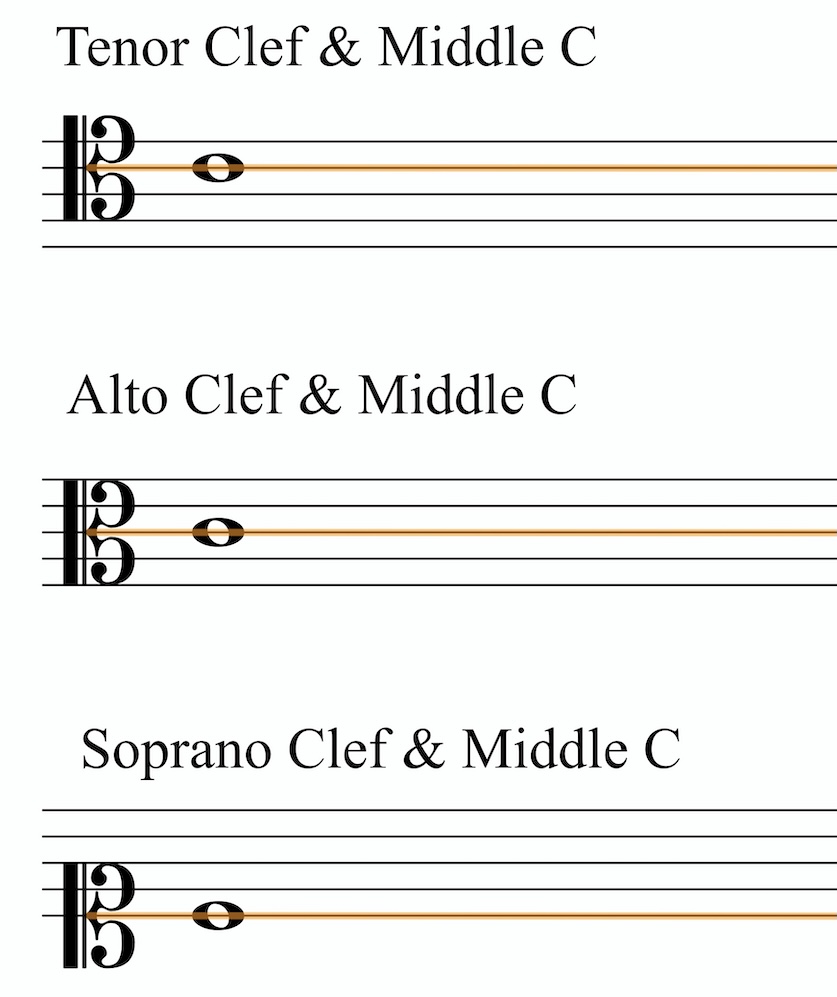
Many of the earliest clefs indicate middle c as a reference pitch, such as the soprano clef, alto clef, and tenor clef. The soprano clef is rarely in use today. You can see that all three clefs point to middle C from the centre of the clef.
The Grand Staff and Middle C
The grand staff combines a treble clef on an upper staff and a bass clef on a lower staff. Piano music is usually written and read on grand staff due to the large range of the piano. It is also useful in music theory as it allows us to analyze music since it provides such a large range of pitches. The grand staff is connected by a brace which lets you know that the two staves are connected as one.
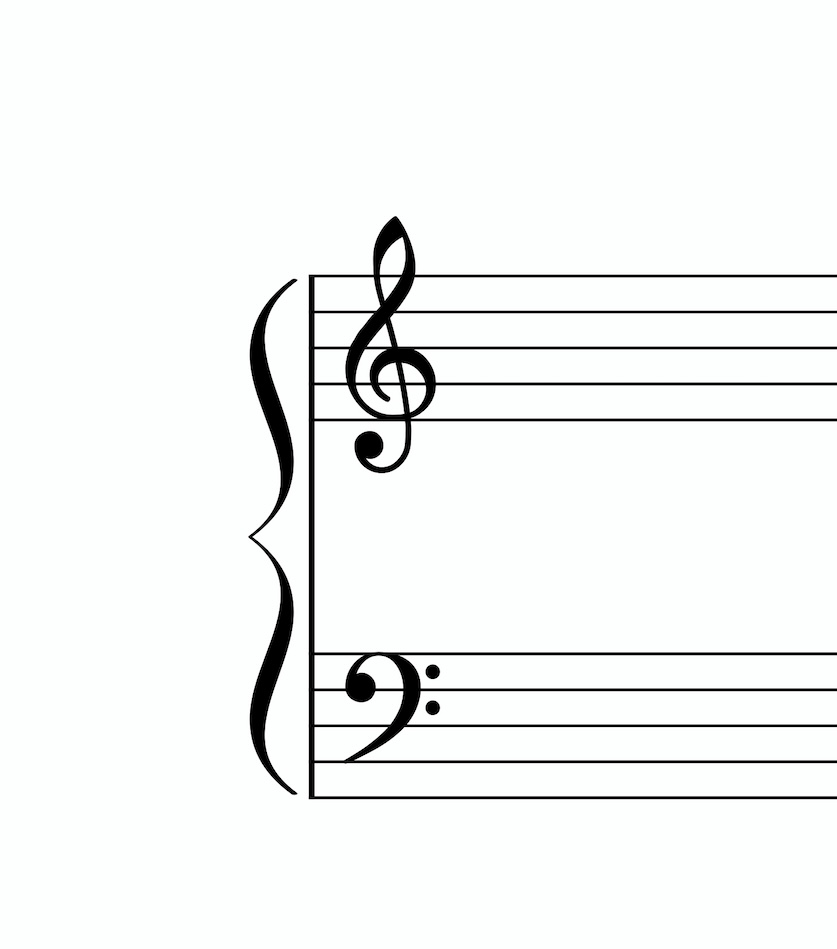
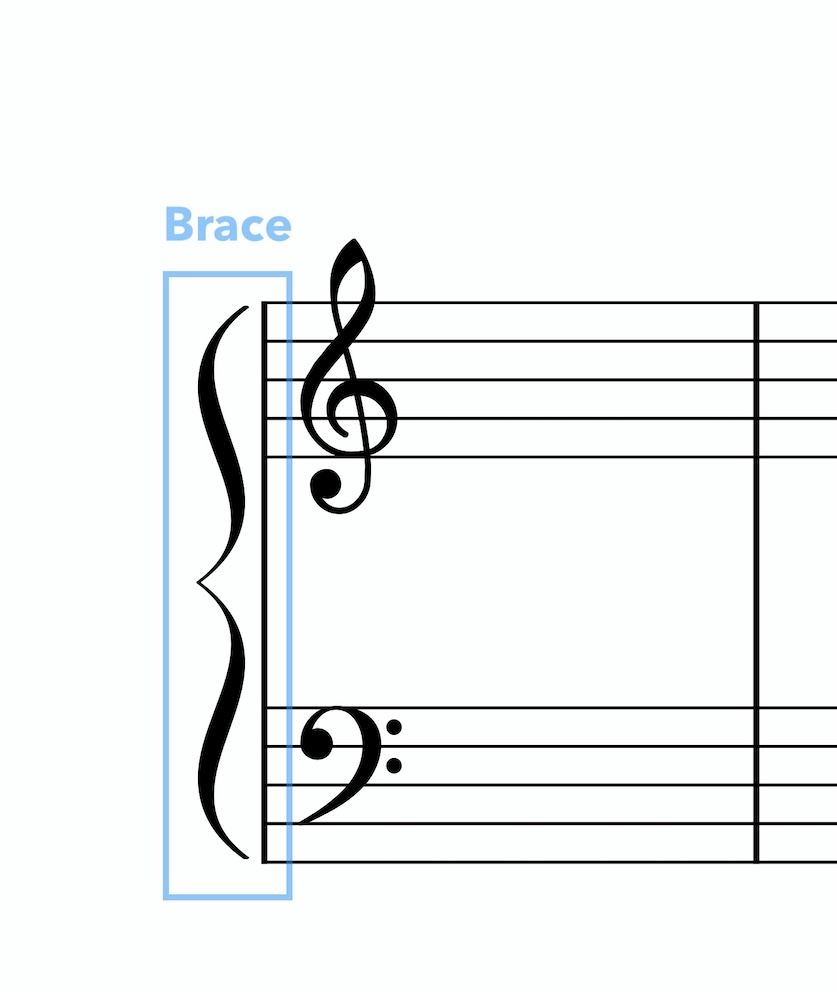
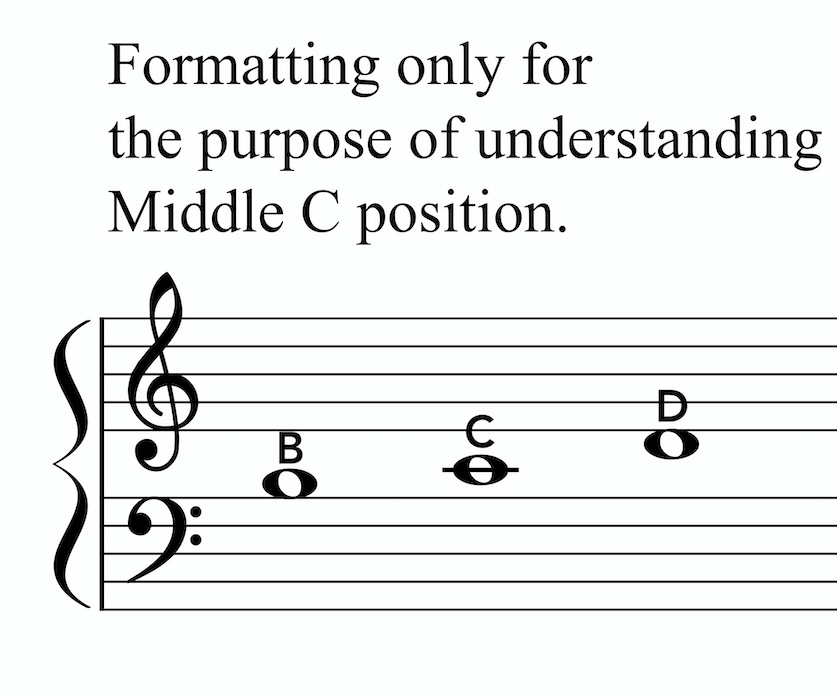
Here is the musical alphabet presented from low to high on the grand staff. The pitch that links the two staves together is middle C. Middle C can be written above the bass clef or below the treble clef but it is important to know that it is the same pitch and location regardless of which clef we write it on.
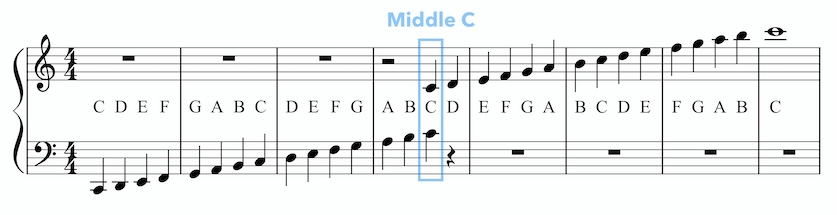
Middle C connects to bass and treble clefs. Below, you can see how the notes progress from one staff to the next with middle C in the middle. This is just a visual aid for learning, it’s pretty much never written like this.
Octave Indications
An octave is the interval between one note and another note with the same name but a higher or lower pitch. For example:
- C to the next higher C is one octave.
- C to the next lower C is also one octave.
- A to the next higher A is one octave.
- A to the next lower A is one octave.
There will be a dedicated lesson on Octaves in a future lesson. Today is just an orientation to the idea.
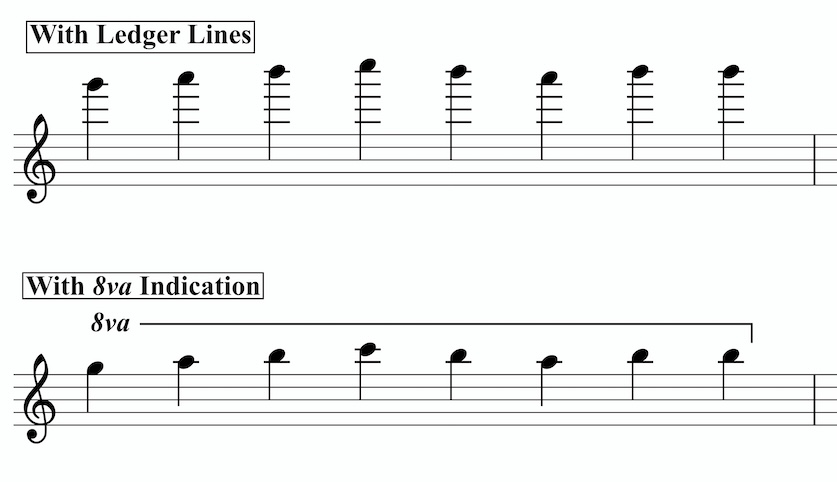
If we need to write passages of music outside the range of either clef we can use ledger lines or for extended passages we can use the octave sign (ottava, 8va, 8vb).
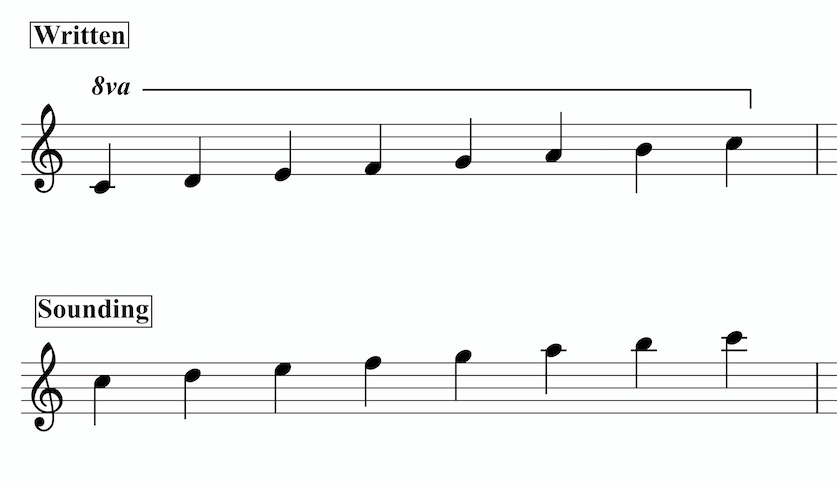
8va = perform the pitch one octave higher than written
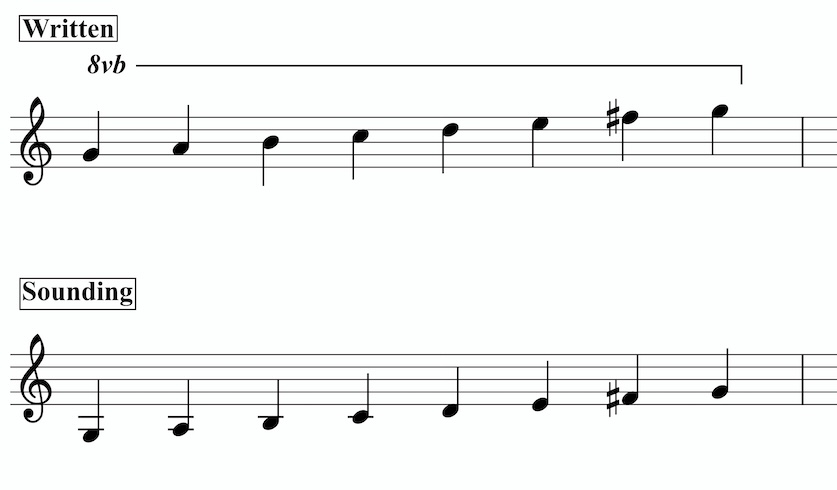
8vb = perform the pitch one octave lower than written
Below is an example of the octave above indication where you can see that the written music ends up sounding much higher. You don’t need to fully understand the notes at this time.
Below is an example of the octave below indication where you can see that the written music ends up sounding much higher.
Below is an example of how very high passages use too so many ledger lines that the reading can become difficult. With the octave indication the notes are brought back into a more reasonable range.
In the next lesson we will briefly discuss pitch class and octave designation to see how the various clefs and pitches are laid out in a universal perspective.