Theory Lesson No.4a: Note Anatomy, Steps and Skips, Treble Clef Notes, Bass Clef Notes. In this lesson we will learn about the basic visual building blocks of a note, movement on the staff by step or skip, as well as the basic note names on bass clef and treble clef. Although the next lesson will cover the concept of middle C, a brief discussion at the end covers the beginning of octave designation. You can find all the lessons at the Music Theory Lessons page. Here’s the Youtube link if you want to watch it there.
Introduction to Note Anatomy
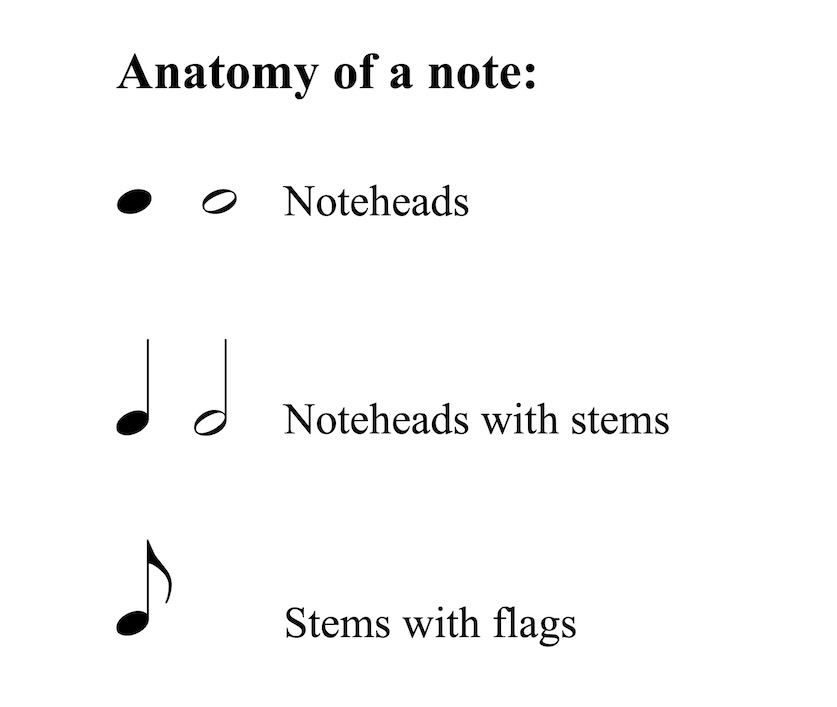
Notehead – A notehead in music is the oval part of a note that indicates pitch by its vertical position on the staff. It can be filled in or hollow which indicates rhythm (filled for shorter, hollow for longer durations). This is not a rhythm lesson today we will cover rhythm in a later lesson. The notehead is placed on the lines or spaces of the staff to indicate a specific pitch.
Stem
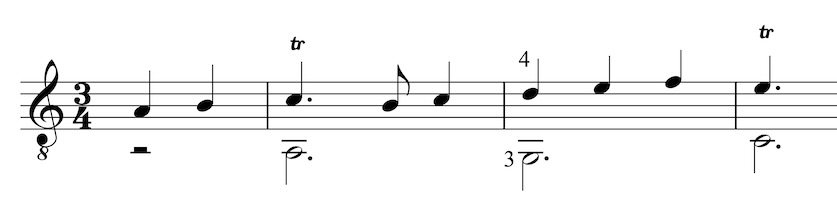
A music note’s stem is the thin, vertical line attached to the note head that helps indicate the note’s duration and later will help indicate other things such as which voice it is part of. In single voice textures the step will point up if below the B line or down if above.

In a two voice texture the upper voice stems will point up and the lower voice stems will point down making the two distinct voices separate and easy to recognize.
Steps and Skips on the Staff
It is useful to when discussing music theory to be able to describe the movement of the notes on the staff. So here is some terminology that will be used throughout my theory lessons. On the staff, steps (stepwise motion) are movements from line-to-space or space-to-line while skips jump over one of those: line-to-line, space-to-space.
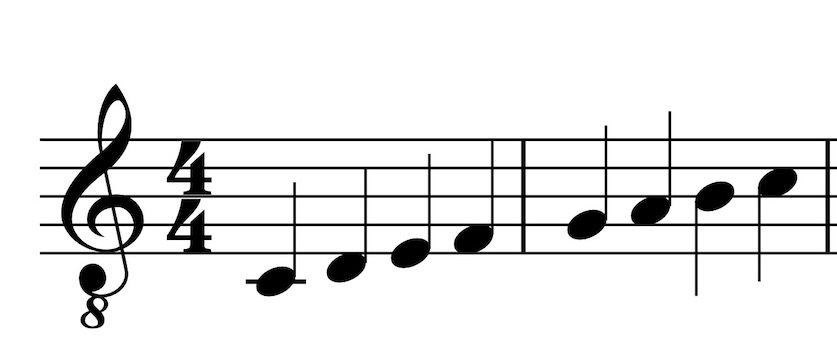
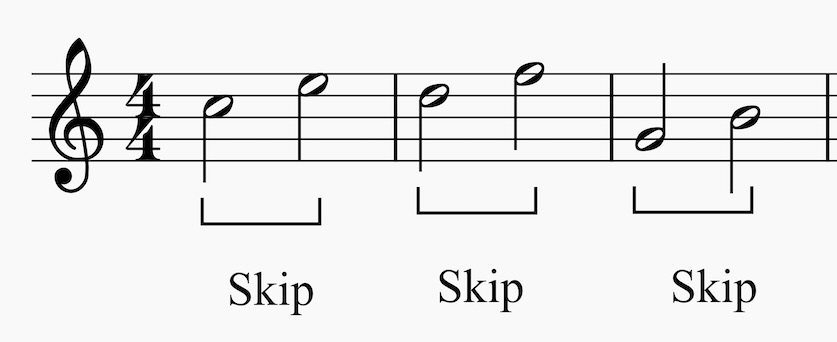
Later on when we talk about intervals this terminology can mean something different but today we are just talking about movement on the staff.
Naming notes on the treble clef and bass clef
We are going to do some basic note naming today just as an introduction. However, one thing I’m leaving out is orientating the pitch in relationship to middle C whichis a specific note that will help us in pitch and octave designation. I will be mentioning middle C today but be aware that I will be explaining middle C as part of a future lesson: Pitch Designation and Pitch Classes
Note Naming on the Treble Clef
G clef orientation – As we discussed in the last lesson, the treble clef is also called the G clef as it points to G as a reference point.
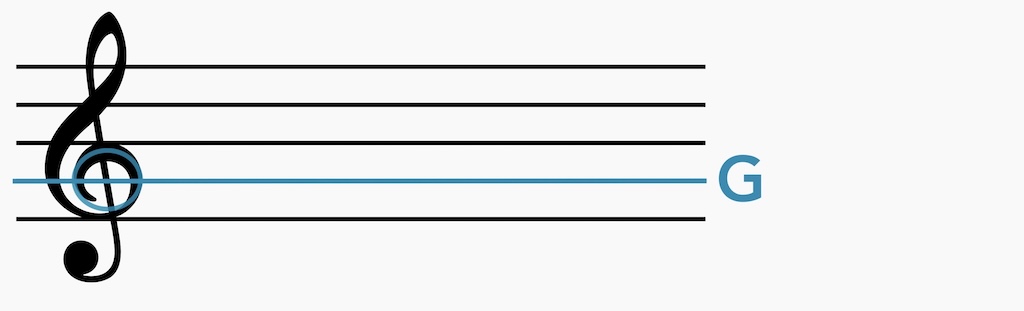
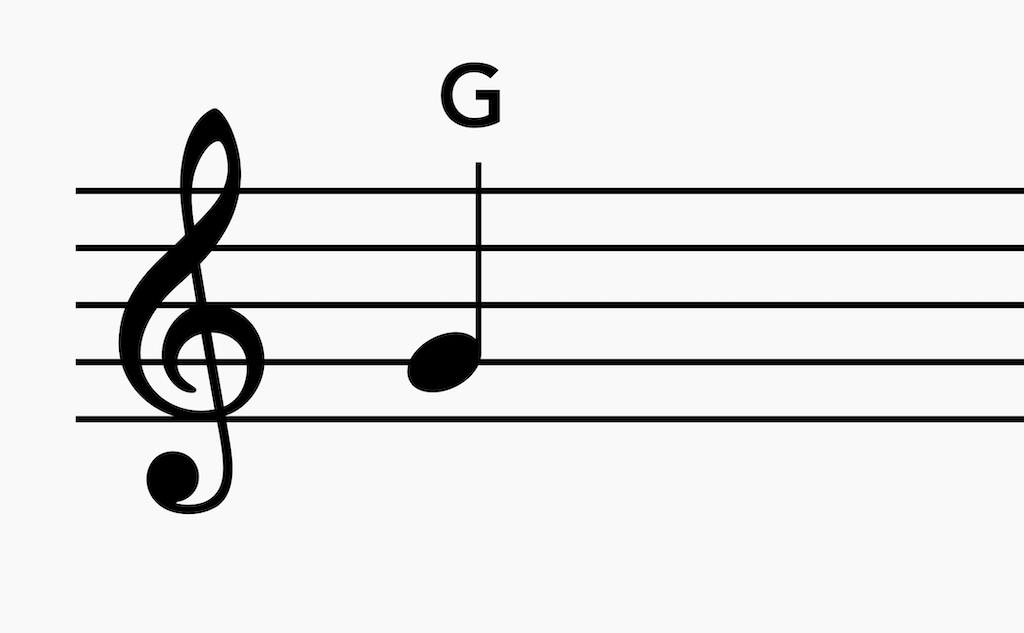
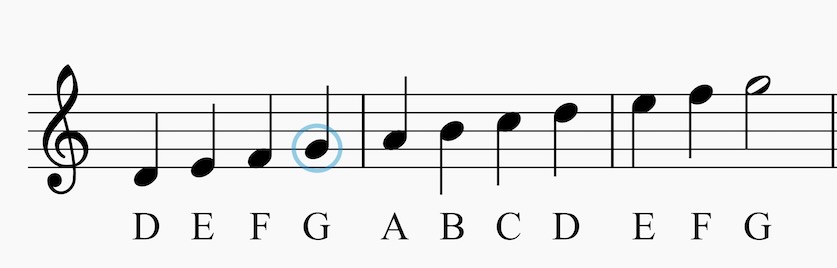
Using stepwise motion (see we are already using the word!) we can figure out the notes on staff with G as a reference and then utilize the musical alphabet in order.
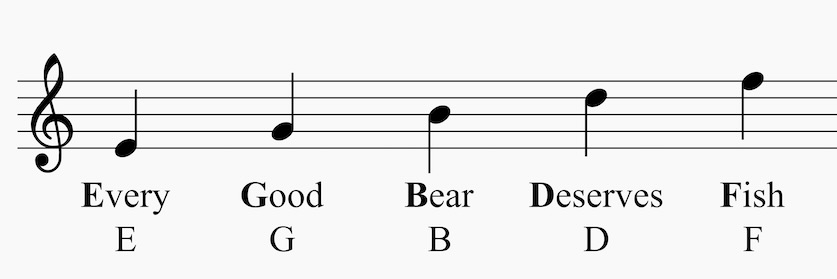
When first starting to learn the notes using sayings and acronyms can be helpful. For the line notes I use: Every Good Bear Deserves Fish
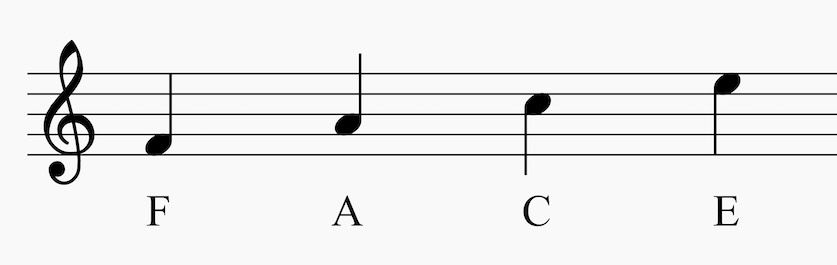
The space notes spell: FACE
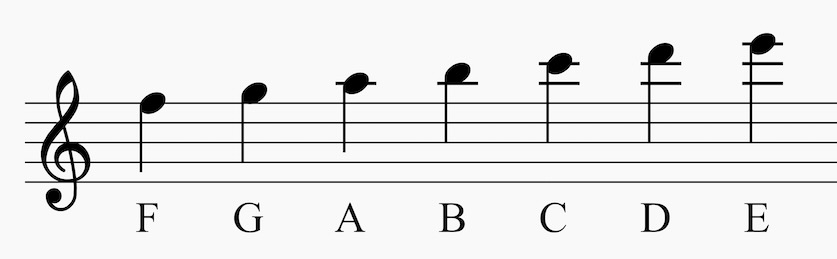
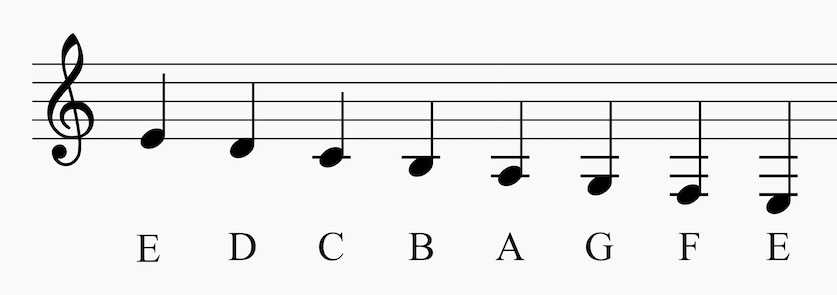
We can also extend the range of the staff with ledger lines either above or below the staff.
Note Naming on the Bass Clef
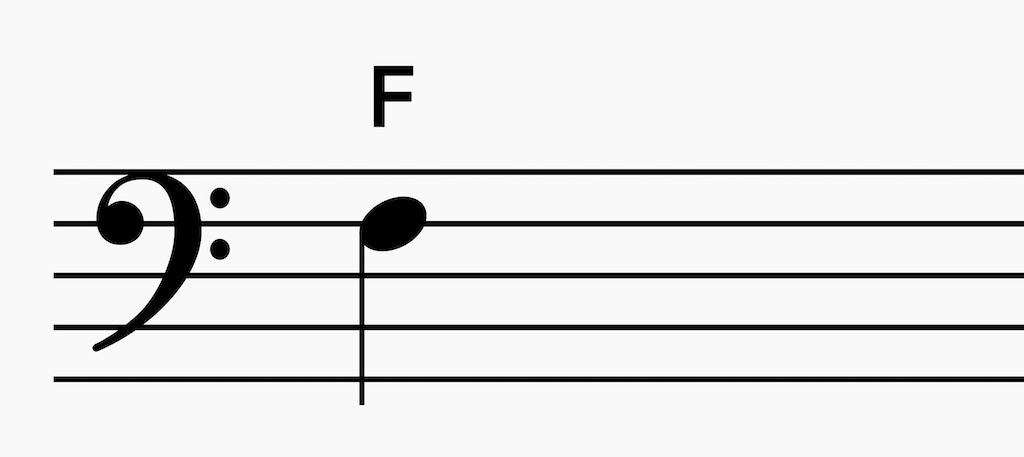
F clef orientation – As we discussed in the previous lesson, the bass clef is also called the F clef as it points to F as a reference.
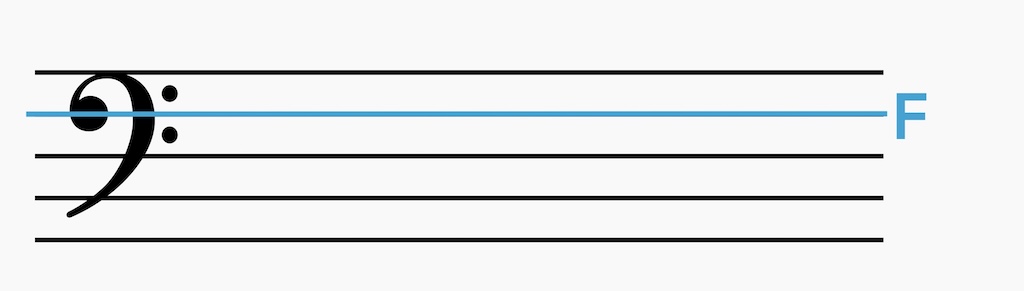
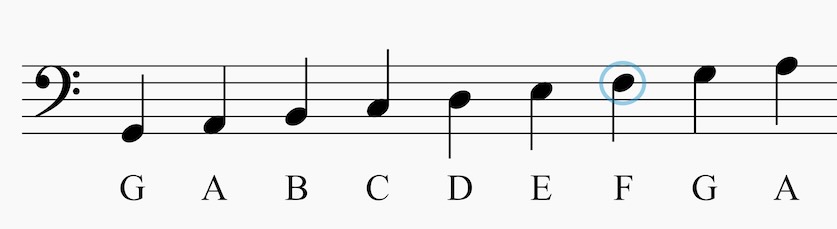
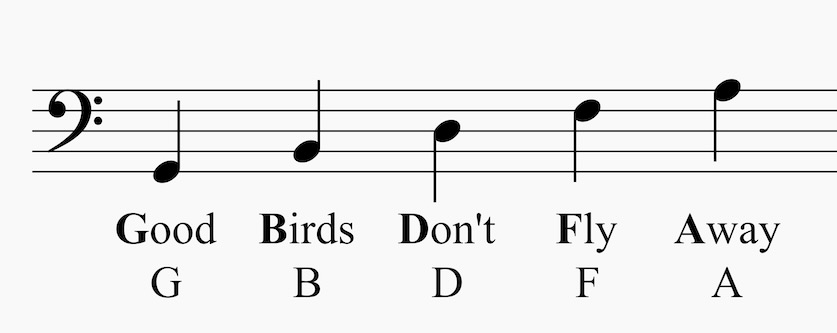
When first starting to learn the notes using sayings and acronyms can be helpful. For the line notes I use: Good Birds Don’t Fly Away
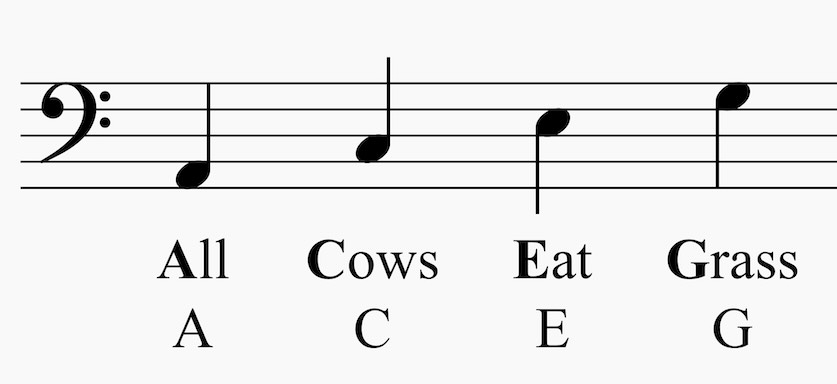
For the space notes we can use: All Cows Eat Grass
We can also extend the range of the staff with ledger lines either above or below the staff.
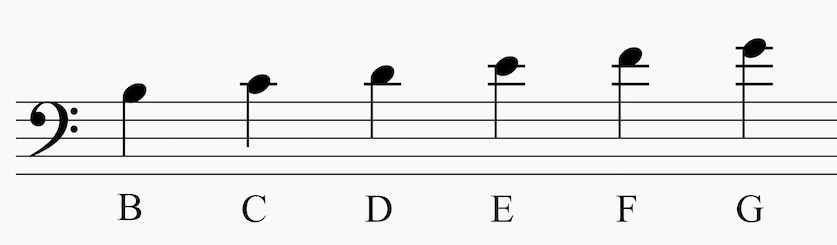
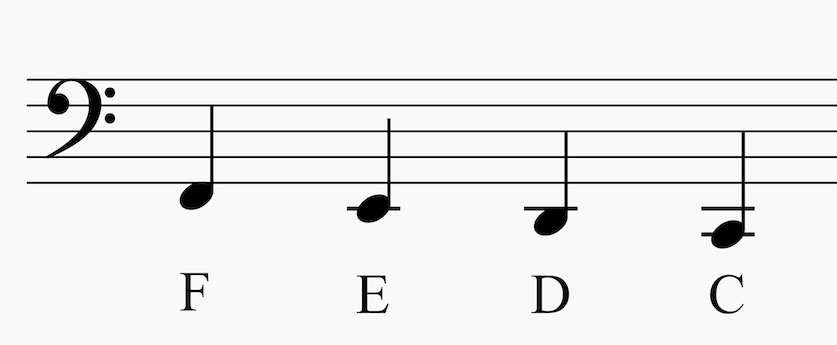
Preparatory lesson on middle C
In the next lesson we will discuss middle C and the grand stave in order to start understanding how pitch works in terms of octave designation. In other words, how does the register of the notes from all the clefs fit together? Here’s a brief prep into the topic.
We saw middle C twice today already – In a low ledger line on Treble Clef and a high ledger line in bass clef. The below two notes are the same exact pitch.
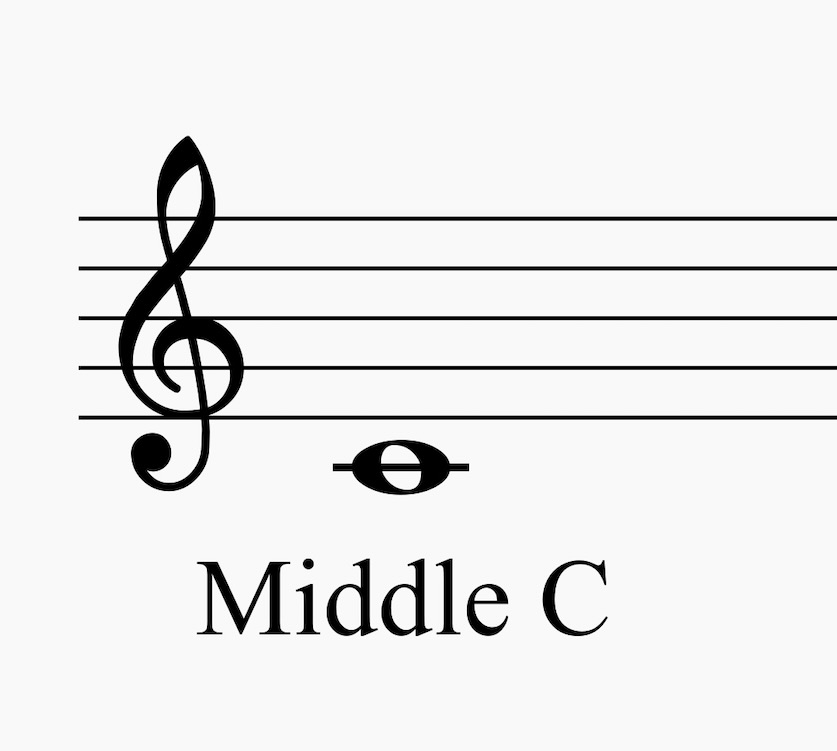
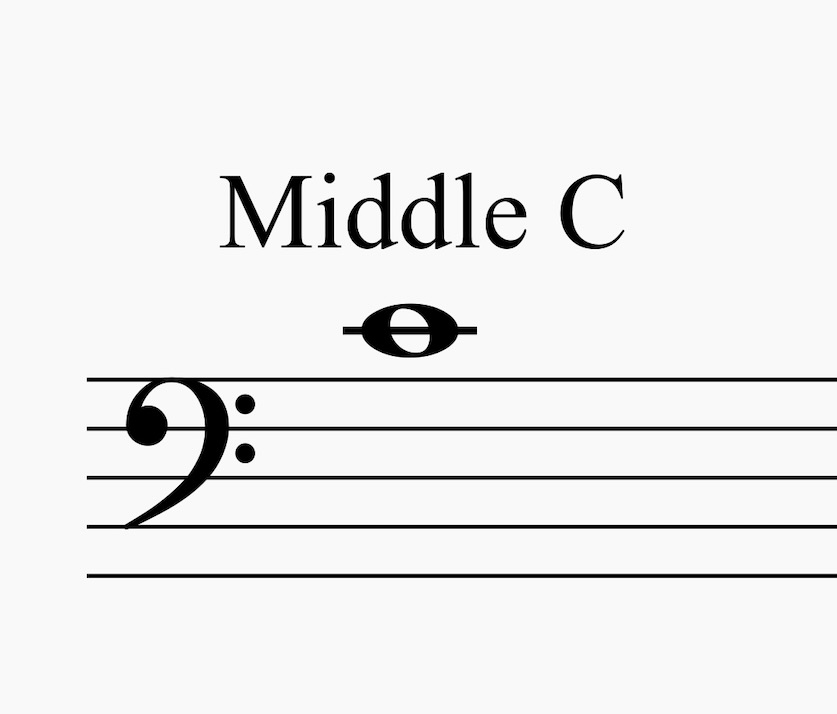
This means that pitches between the clefs can overlap. Clefs are simply a way to organize pitch to sit comfortable on the staff for practical use.
We could also view it in grand staff which combines treble clef and bass clef
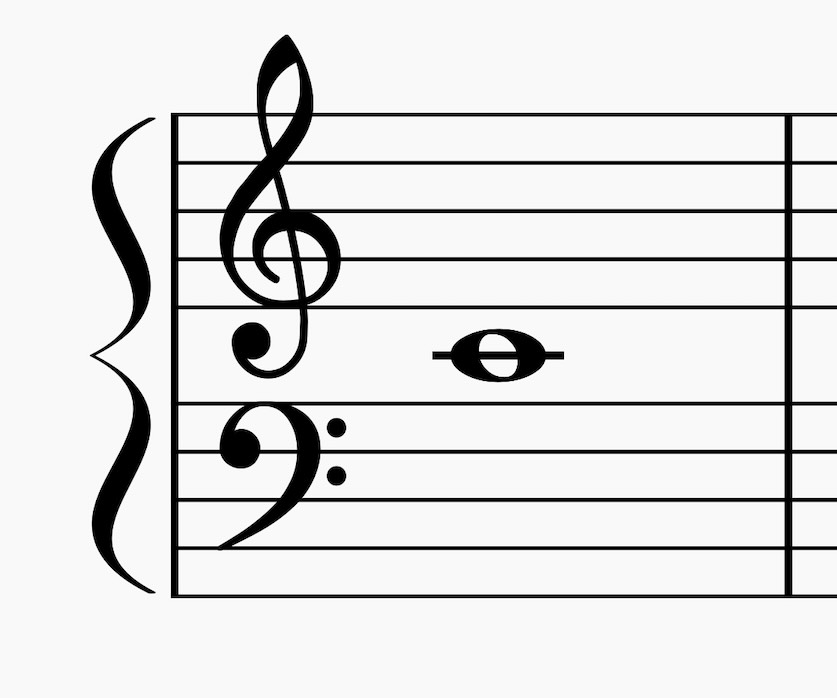
We can even write out the same pitches in both clefs. They look like they are different but these are all the same exact pitch and register.
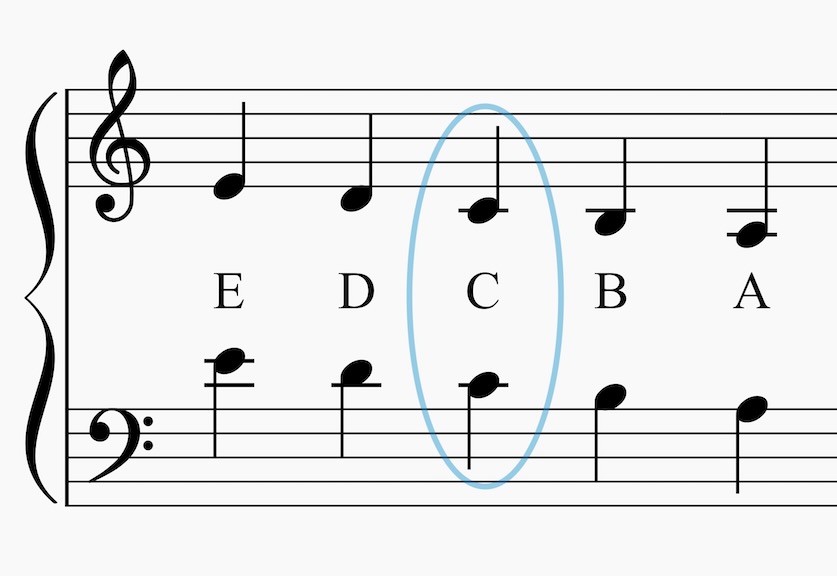
We will cover this topic in greater detail in the next lesson.
Hope you found that helpful. Find more theory lessons on the Music Theory Lessons page. I’m offering these lessons free of charge but feel free to support the site here. If you need any clarification on this particular lesson please leave a comment below.